


Multiplex Assay Kit for Acid Phosphatase 5, Tartrate Resistant (ACP5) ,etc. by CBA (Cytometric Bead Array) 

TRAP; TrATPase; Tartrate Resistant Acid Phosphatase; Type 5 acid phosphatase
Overview
Properties
- Product No.CMA902Hu
- Organism SpeciesHomo sapiens (Human) Same name, Different species.
- ApplicationsFLIA Kit for Antigen Detection.
Research use only - DownloadInstruction Manual
- CategoryEnzyme & KinaseMetabolic pathwayHepatology
Sign into your account
Share a new citation as an author
Upload your experimental result
Review

Contact us
Please fill in the blank.
-
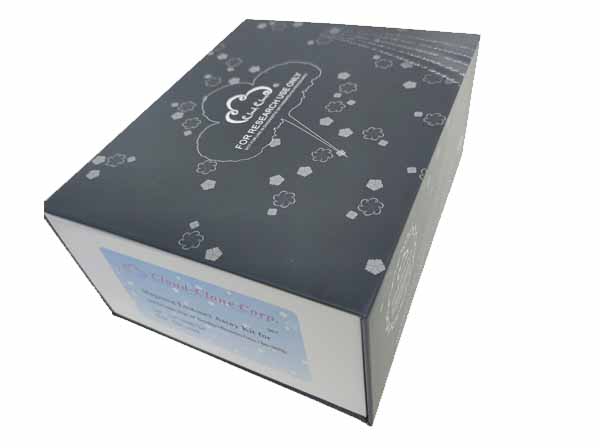 Packages (Simulation)
-
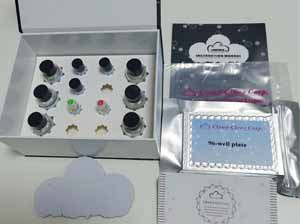 Packages (Simulation)
-
 ISO9001: 2008, ISO13485: 2003 Registered
Recovery
Matrices listed below were spiked with certain level of recombinant Acid Phosphatase 5, Tartrate Resistant (ACP5) ,etc. by CBA (Cytometric Bead Array) and the recovery rates were calculated by comparing the measured value to the expected amount of Acid Phosphatase 5, Tartrate Resistant (ACP5) ,etc. by CBA (Cytometric Bead Array) in samples.
| Matrix | Recovery range (%) | Average(%) |
| serum(n=5) | 94-103 | 101 |
| EDTA plasma(n=5) | 99-105 | 102 |
| heparin plasma(n=5) | 91-105 | 99 |
Precision
Intra-assay Precision (Precision within an assay): 3 samples with low, middle and high level Acid Phosphatase 5, Tartrate Resistant (ACP5) ,etc. by CBA (Cytometric Bead Array) were tested 20 times on one plate, respectively.
Inter-assay Precision (Precision between assays): 3 samples with low, middle and high level Acid Phosphatase 5, Tartrate Resistant (ACP5) ,etc. by CBA (Cytometric Bead Array) were tested on 3 different plates, 8 replicates in each plate.
CV(%) = SD/meanX100
Intra-Assay: CV<10%
Inter-Assay: CV<12%
Linearity
The linearity of the kit was assayed by testing samples spiked with appropriate concentration of Acid Phosphatase 5, Tartrate Resistant (ACP5) ,etc. by CBA (Cytometric Bead Array) and their serial dilutions. The results were demonstrated by the percentage of calculated concentration to the expected.
| Sample | 1:2 | 1:4 | 1:8 | 1:16 |
| serum(n=5) | 87-95% | 83-98% | 81-96% | 93-102% |
| EDTA plasma(n=5) | 81-99% | 97-104% | 85-93% | 91-98% |
| heparin plasma(n=5) | 88-101% | 93-105% | 80-95% | 80-93% |
Stability
The stability of kit is determined by the loss rate of activity. The loss rate of this kit is less than 5% within the expiration date under appropriate storage condition.
To minimize extra influence on the performance, operation procedures and lab conditions, especially room temperature, air humidity, incubator temperature should be strictly controlled. It is also strongly suggested that the whole assay is performed by the same operator from the beginning to the end.
Reagents and materials provided
| Reagents | Quantity | Reagents | Quantity |
Assay procedure summary
1. Add 200μL analysis buffer solution to each well of the plate for pre-wetting;
2. Preparation of standards, reagents and samples before the experiment;
3. Add 100μL standard or sample to each well, add 10μL magnetic beads, and incubate 120 minutes protect from light at 25°C on shaker;
4. Remove liquid on magnetic frame, add 100μL prepared Detection Reagent A. Incubate 60 minutes protect from light at 25°C on shaker;
5. Remove liquid on magnetic frame, add 100μL prepared Detection Reagent B, and incubate 30 minutes protect from light at 25°C on shaker;
6. Wash plate once on magnetic frame;
7. Add 100μL sheath fluid, swirl for 10 minutes, read on the machine.
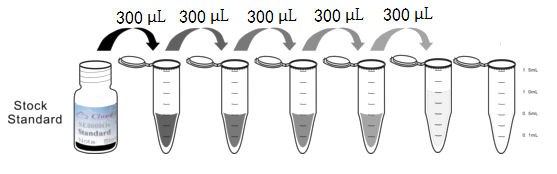
Test principle
Anti-Acid Phosphatase 5, Tartrate Resistant (ACP5) ,etc. by CBA (Cytometric Bead Array) antibody was coated on the surface of magnetic beads, to make solid phase carrier. Standard or sample were added to the magnetic beads, respectively, in which Acid Phosphatase 5, Tartrate Resistant (ACP5) ,etc. by CBA (Cytometric Bead Array) was bound to the antibody connected to the solid phase carrier, and then biotinylated anti-Acid Phosphatase 5, Tartrate Resistant (ACP5) ,etc. by CBA (Cytometric Bead Array) antibodies were added. PE-labeled avidin was added. There is a positive correlation between the concentration of Acid Phosphatase 5, Tartrate Resistant (ACP5) ,etc. by CBA (Cytometric Bead Array) in the sample and corresponding value of MFI (Median Fluorescence Intensity). Flow Cytometer was used to determine and calculate the sample concentration.
Giveaways
Increment services
Citations
- Oxytocin promotes bone formation during the alveolar healing process in old acyclic female ratsScienceDirect: S0003996912001021
- Exendin-4 Increases Bone Mineral Density in Type 2 Diabetic OLETF Rats Potentially Through the Down-Regulation of SOST/Sclerostin in OsteocytesPubMed: 23357248
- Valvular osteoclasts in calcification and aortic valve stenosis severity.Pubmed: 23452891
- Antiosteoporosis Activity of New Oriental Medicine Preparation (Kyungokgo Mixed with Water Extract of Hovenia dulcis) on the Ovariectomized MicePubmed:25737735
- The influence of bexarotene, a selective agonist of the retinoid receptor X (RXR), and tazarotene, a selective agonist of the retinoid acid receptor (RAR), on bone metabolism in ratsPubMed: 26569440
- The effects of strength training and raloxifene on bone health in aging ovariectomized ratsPubmed:26812611
- In Vitro and In Vivo Effects of Gracilaria verrucosa Extracts on Osteoclast Differentiation.pubmed:28335442
- Anti-osteoporotic effects of an antidepressant tianeptine on ovariectomized ratsS0753332216322752
- Correlating oxidative stress-related factors with bone metabolic markers in older adult male patients exhibiting degenerative osteoporosis in the high-altitude hypoxic area of China: study protocol for a non-randomized controlled trialissn:2542-3975
- Evidence for excessive osteoclast activation in SIRT6 null micePubmed:30030453
- Suppression Effect of Astaxanthin on Osteoclast Formation In Vitro and Bone Loss In VivoPubmed:29562730
- The decline of whole-body glucose metabolism in ovariectomized ratsPubmed: 30292771
- NUMB maintains bone mass by promoting degradation of PTEN and GLI1 via ubiquitination in osteoblastsPubmed: 30455992
- QKI deficiency leads to osteoporosis by promoting RANKL-induced osteoclastogenesis and disrupting bone metabolismPubmed: 32382069
- Effect of Corticopuncture (CP), Photobiomodulation (PBM) and the Combined Method on the Rate of Tooth Movement and Root Resorption: A Molecular, Histological …
- Gujiansan Ameliorates Avascular Necrosis of the Femoral Head by Regulating Autophagy via the HIF-1α/BNIP3 Pathway34512780