


Multiplex Assay Kit for Annexin A1 (ANXA1) ,etc. by CBA (Cytometric Bead Array) 

ANX-A1; ANX1; LPC1; Lipocortin I; Chromobindin-9; Calpactin II; Phospholipase A2 inhibitory protein
- UOM
- FOB US$ 449.00 US$ 467.00 US$ 492.00 US$ 527.00 US$ 562.00 US$ 613.00 US$ 691.00 US$ 864.00
- Quantity
Overview
Properties
- Product No.CME787Mu
- Organism SpeciesMus musculus (Mouse) Same name, Different species.
- ApplicationsFLIA Kit for Antigen Detection.
Research use only - DownloadInstruction Manual
- CategoryTumor immunity
Sign into your account
Share a new citation as an author
Upload your experimental result
Review

Contact us
Please fill in the blank.
-
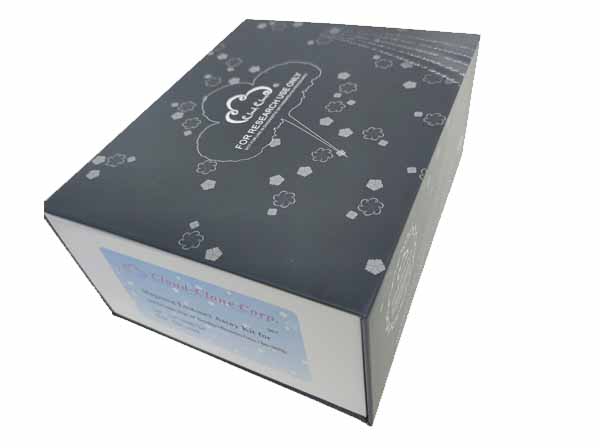 Packages (Simulation)
-
 Packages (Simulation)
-
 ISO9001: 2008, ISO13485: 2003 Registered
Recovery
Matrices listed below were spiked with certain level of recombinant Annexin A1 (ANXA1) ,etc. by CBA (Cytometric Bead Array) and the recovery rates were calculated by comparing the measured value to the expected amount of Annexin A1 (ANXA1) ,etc. by CBA (Cytometric Bead Array) in samples.
| Matrix | Recovery range (%) | Average(%) |
| serum(n=5) | 79-96 | 88 |
| EDTA plasma(n=5) | 97-105 | 101 |
| heparin plasma(n=5) | 79-95 | 90 |
Precision
Intra-assay Precision (Precision within an assay): 3 samples with low, middle and high level Annexin A1 (ANXA1) ,etc. by CBA (Cytometric Bead Array) were tested 20 times on one plate, respectively.
Inter-assay Precision (Precision between assays): 3 samples with low, middle and high level Annexin A1 (ANXA1) ,etc. by CBA (Cytometric Bead Array) were tested on 3 different plates, 8 replicates in each plate.
CV(%) = SD/meanX100
Intra-Assay: CV<10%
Inter-Assay: CV<12%
Linearity
The linearity of the kit was assayed by testing samples spiked with appropriate concentration of Annexin A1 (ANXA1) ,etc. by CBA (Cytometric Bead Array) and their serial dilutions. The results were demonstrated by the percentage of calculated concentration to the expected.
| Sample | 1:2 | 1:4 | 1:8 | 1:16 |
| serum(n=5) | 83-104% | 84-105% | 78-105% | 95-102% |
| EDTA plasma(n=5) | 78-92% | 84-103% | 86-101% | 96-105% |
| heparin plasma(n=5) | 96-103% | 95-105% | 81-101% | 93-105% |
Stability
The stability of kit is determined by the loss rate of activity. The loss rate of this kit is less than 5% within the expiration date under appropriate storage condition.
To minimize extra influence on the performance, operation procedures and lab conditions, especially room temperature, air humidity, incubator temperature should be strictly controlled. It is also strongly suggested that the whole assay is performed by the same operator from the beginning to the end.
Reagents and materials provided
| Reagents | Quantity | Reagents | Quantity |
Assay procedure summary
1. Add 200μL analysis buffer solution to each well of the plate for pre-wetting;
2. Preparation of standards, reagents and samples before the experiment;
3. Add 100μL standard or sample to each well, add 10μL magnetic beads, and incubate 120 minutes protect from light at 25°C on shaker;
4. Remove liquid on magnetic frame, add 100μL prepared Detection Reagent A. Incubate 60 minutes protect from light at 25°C on shaker;
5. Remove liquid on magnetic frame, add 100μL prepared Detection Reagent B, and incubate 30 minutes protect from light at 25°C on shaker;
6. Wash plate once on magnetic frame;
7. Add 100μL sheath fluid, swirl for 10 minutes, read on the machine.
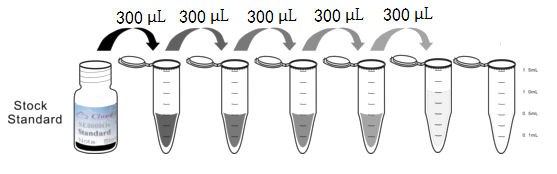
Test principle
Anti-Annexin A1 (ANXA1) ,etc. by CBA (Cytometric Bead Array) antibody was coated on the surface of magnetic beads, to make solid phase carrier. Standard or sample were added to the magnetic beads, respectively, in which Annexin A1 (ANXA1) ,etc. by CBA (Cytometric Bead Array) was bound to the antibody connected to the solid phase carrier, and then biotinylated anti-Annexin A1 (ANXA1) ,etc. by CBA (Cytometric Bead Array) antibodies were added. PE-labeled avidin was added. There is a positive correlation between the concentration of Annexin A1 (ANXA1) ,etc. by CBA (Cytometric Bead Array) in the sample and corresponding value of MFI (Median Fluorescence Intensity). Flow Cytometer was used to determine and calculate the sample concentration.
Giveaways
Increment services

Citations
- Dysregulation of Anti-Inflammatory Annexin A1 Expression in Progressive Crohns DiseasePubMed: PMC3794972
- Modulatory Effect of Phytoestrogens and Curcumin on Induction of Annexin 1 in Human Peripheral Blood Mononuclear Cells and their Inhibitory Effect on Secretory Phospholipase A2Ajol: Source
- Host Biomarkers of Invasive Pulmonary Aspergillosis to Monitor Therapeutic ResponseAsm: Source
- Characterization of secretomes from a human blood brain barrier endothelial cells in-vitro model after ischemia by stable isotope labeling with aminoacids in cell culture (SILAC)PubMed: 26718731
- Annexin A1 Is a Key Modulator of Mesenchymal Stromal Cell–Mediated Improvements in Islet FunctionPubMed: 26470781
- Annexin A1 Is Increased in the Plasma of Preeclamptic WomenPubMed: 26398190
- 膜联蛋白A1 和CA19-9 在胆管癌中的表达及其临床意义article:8686
- Protective Aptitude of Annexin A1 in Arterial Neointima Formation in Atherosclerosis-Prone Mice-Brief Report.pubmed:28062503
- Mesenchymal stromal cells improve human islet function through released products and extracellular matrix.pubmed:29101297
- Proresolving protein Annexin A1: The role in type 2 diabetes mellitus and obesityPubmed:29677533
- Annexin A1 is elevated in patients with COPD and affects lung fibroblast functionPubmed:29440885
- Applying host disease status biomarkers to therapeutic response monitoring in invasive aspergillosis patientsPubmed:29370415
- EFFECTS OF MULTICOMPONENT EXERCISE ON PROGRESSION OF BRAIN ATROPHY AND COGNITION IN AMNESTIC MILD COGNITIVE IMPAIRMENT …pdf:3395
- Resolution of inflammation in neuromyelitis optica spectrum disordersPubmed: 30300851
- Effects of annexin A1 on apoptosis and cell cycle arrest in human leukemic cell lines
- Annexin A1 accounts for an anti-inflammatory binding target of sesamin metabolitesPubmed: 32133417
- ANXA1 directs Schwann cells proliferation and migration to accelerate nerve regeneration through the FPR2/AMPK pathwayPubmed: 32908567
- Expression of annexin-A1 in blood and tissue leukocytes of leprosy patients33263684
- Annexin-A1 SUMOylation regulates microglial polarization after cerebral ischemia by modulating IKK¦Á stability via selective autophagy33523920