


Multiplex Assay Kit for Caspase 1 (CASP1) ,etc. by CBA (Cytometric Bead Array) 

ICE; IL1BC; IL1-BC; P45; Interleukin 1 Beta Converting Enzyme; Apoptosis-Related Cysteine Peptidase; Interleukin-1 beta convertase
- UOM
- FOB US$ 427.00 US$ 443.00 US$ 468.00 US$ 501.00 US$ 534.00 US$ 583.00 US$ 657.00 US$ 821.00
- Quantity
Overview
Properties
- Product No.CMB592Mu
- Organism SpeciesMus musculus (Mouse) Same name, Different species.
- ApplicationsFLIA Kit for Antigen Detection.
Research use only - DownloadInstruction Manual
- CategorySignal transductionEnzyme & KinaseApoptosisInfection immunity
Sign into your account
Share a new citation as an author
Upload your experimental result
Review

Contact us
Please fill in the blank.
-
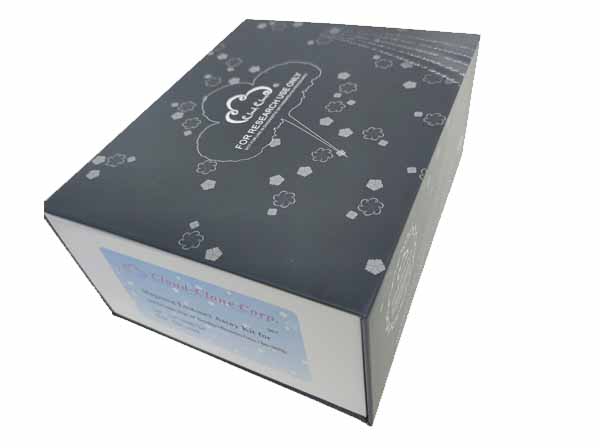 Packages (Simulation)
-
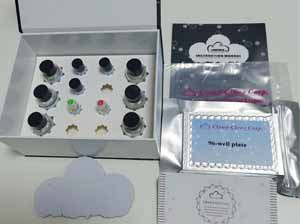 Packages (Simulation)
-
 ISO9001: 2008, ISO13485: 2003 Registered
Recovery
Matrices listed below were spiked with certain level of recombinant Caspase 1 (CASP1) ,etc. by CBA (Cytometric Bead Array) and the recovery rates were calculated by comparing the measured value to the expected amount of Caspase 1 (CASP1) ,etc. by CBA (Cytometric Bead Array) in samples.
| Matrix | Recovery range (%) | Average(%) |
| serum(n=5) | 90-98 | 94 |
| EDTA plasma(n=5) | 94-103 | 99 |
| heparin plasma(n=5) | 78-104 | 94 |
Precision
Intra-assay Precision (Precision within an assay): 3 samples with low, middle and high level Caspase 1 (CASP1) ,etc. by CBA (Cytometric Bead Array) were tested 20 times on one plate, respectively.
Inter-assay Precision (Precision between assays): 3 samples with low, middle and high level Caspase 1 (CASP1) ,etc. by CBA (Cytometric Bead Array) were tested on 3 different plates, 8 replicates in each plate.
CV(%) = SD/meanX100
Intra-Assay: CV<10%
Inter-Assay: CV<12%
Linearity
The linearity of the kit was assayed by testing samples spiked with appropriate concentration of Caspase 1 (CASP1) ,etc. by CBA (Cytometric Bead Array) and their serial dilutions. The results were demonstrated by the percentage of calculated concentration to the expected.
| Sample | 1:2 | 1:4 | 1:8 | 1:16 |
| serum(n=5) | 92-101% | 87-103% | 80-98% | 84-97% |
| EDTA plasma(n=5) | 83-97% | 95-105% | 94-103% | 79-92% |
| heparin plasma(n=5) | 94-102% | 79-96% | 94-102% | 86-95% |
Stability
The stability of kit is determined by the loss rate of activity. The loss rate of this kit is less than 5% within the expiration date under appropriate storage condition.
To minimize extra influence on the performance, operation procedures and lab conditions, especially room temperature, air humidity, incubator temperature should be strictly controlled. It is also strongly suggested that the whole assay is performed by the same operator from the beginning to the end.
Reagents and materials provided
| Reagents | Quantity | Reagents | Quantity |
Assay procedure summary
1. Add 200μL analysis buffer solution to each well of the plate for pre-wetting;
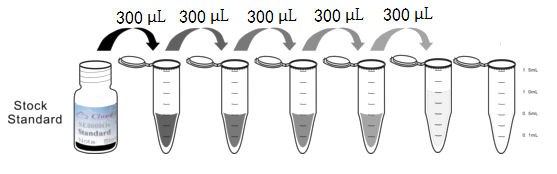
2. Preparation of standards, reagents and samples before the experiment;
3. Add 100μL standard or sample to each well, add 10μL magnetic beads, and incubate 120 minutes protect from light at 25°C on shaker;
4. Remove liquid on magnetic frame, add 100μL prepared Detection Reagent A. Incubate 60 minutes protect from light at 25°C on shaker;
5. Remove liquid on magnetic frame, add 100μL prepared Detection Reagent B, and incubate 30 minutes protect from light at 25°C on shaker;
6. Wash plate once on magnetic frame;
7. Add 100μL sheath fluid, swirl for 10 minutes, read on the machine.
Test principle
Anti-Caspase 1 (CASP1) ,etc. by CBA (Cytometric Bead Array) antibody was coated on the surface of magnetic beads, to make solid phase carrier. Standard or sample were added to the magnetic beads, respectively, in which Caspase 1 (CASP1) ,etc. by CBA (Cytometric Bead Array) was bound to the antibody connected to the solid phase carrier, and then biotinylated anti-Caspase 1 (CASP1) ,etc. by CBA (Cytometric Bead Array) antibodies were added. PE-labeled avidin was added. There is a positive correlation between the concentration of Caspase 1 (CASP1) ,etc. by CBA (Cytometric Bead Array) in the sample and corresponding value of MFI (Median Fluorescence Intensity). Flow Cytometer was used to determine and calculate the sample concentration.
Giveaways
Increment services
Citations
- Cilostazol Renoprotective Effect: Modulation of PPAR-γ, NGAL, KIM-1 and IL-18 Underlies Its Novel Effect in a Model of Ischemia-ReperfusionPubmed:24816434
- Inflammosome in the human endometrium: further step in the evaluation of the “maternal side”PubMed: 26474737
- Synthetic PreImplantation Factor (PIF) prevents fetal loss by modulating LPS induced inflammatory response.pubmed:28704412
- NS1 protein of 2009 pandemic influenza A virus inhibits porcine NLRP3 inflammasome-mediated interleukin-1 beta production by suppressing ASC ubiquitinationPubmed:29386291
- Recurrent pregnancy loss is associated to leaky gut: a novel pathogenic model of endometrium inflammation?Pubmed:29665864
- A role for the inflammasome in spontaneous labor at termPubmed:27852921
- CHARACTERIZATION OF PORCINE NLRP3 INFLAMMASOME-MEDIATED INTERLEUKIN-1 BETA PRODUCTION IN RESPONSE TO INFLUENZA A VIRUSESPubmed: 29386291
- NLRP3 inflammasome expression in lipopolysaccharide-induced otitis mediaPubmed: 30676848
- Effect of alpha lipoic acid and myoinositol on endometrial inflammasome from recurrent pregnancy loss womenPubmed: 31148259
- Serum Caspase-1 levels in women with polycystic ovary syndromePubmed: 32127139
- Increased Level of Caspase-1 in the Serum of Relapsing-remitting Multiple Sclerosis (RRMS) Patients
- ACTIVITY OF APOPTOSIS MARKERS IN HPV-ASSOCIATED CERVICAL PATHOLOGIES
- CLINICAL AND PATHOGENETIC SIGNIFICANCE OF CHANGES IN PURINE METABOLISM DURING LUNG CANCER
- The NLRP3 inhibitor dapansutrile attenuates folic acid induced nephrotoxicity via inhibiting inflammasome/caspase-1/IL axis and regulating autophagy/proliferation34560082
- The alarmin S100A12 causes sterile inflammation of the human chorioamniotic membranes and preterm birth and neonatal mortality in mice34632484
- TRPV1 Suppressed NLRP3 Through Regulating Autophagy in Microglia After Ischemia-Reperfusion InjuryPubmed:35041191
- Influenza A Virus Infection Activates NLRP3 Inflammasome through Trans-Golgi Network DispersionPubmed:35062292