


Multiplex Assay Kit for Caspase 9 (CASP9) ,etc. by CBA (Cytometric Bead Array) 

APAF3; ICE-LAP6; MCH6; Apoptosis-Related Cysteine Peptidase; Cysteinyl Aspartate Specific Proteinases 9; Apoptotic protease-activating factor 3; ICE-like apoptotic protease 6
- UOM
- FOB US$ 405.00 US$ 420.00 US$ 443.00 US$ 475.00 US$ 506.00 US$ 552.00 US$ 622.00 US$ 778.00
- Quantity
Overview
Properties
- Product No.CMA627Mu
- Organism SpeciesMus musculus (Mouse) Same name, Different species.
- ApplicationsFLIA Kit for Antigen Detection.
Research use only - DownloadInstruction Manual
- CategorySignal transductionEnzyme & KinaseApoptosisTumor immunityInfection immunity
Sign into your account
Share a new citation as an author
Upload your experimental result
Review

Contact us
Please fill in the blank.
-
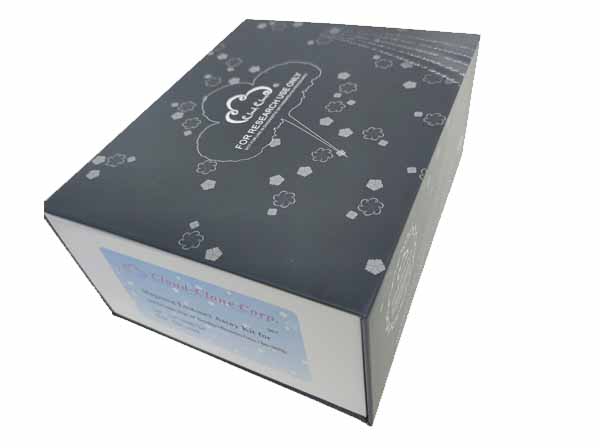 Packages (Simulation)
-
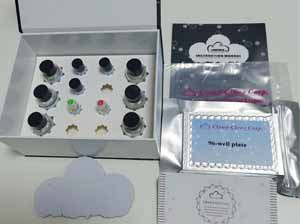 Packages (Simulation)
-
 ISO9001: 2008, ISO13485: 2003 Registered
Recovery
Matrices listed below were spiked with certain level of recombinant Caspase 9 (CASP9) ,etc. by CBA (Cytometric Bead Array) and the recovery rates were calculated by comparing the measured value to the expected amount of Caspase 9 (CASP9) ,etc. by CBA (Cytometric Bead Array) in samples.
| Matrix | Recovery range (%) | Average(%) |
| serum(n=5) | 98-105 | 101 |
| EDTA plasma(n=5) | 97-104 | 101 |
| heparin plasma(n=5) | 80-93 | 90 |
Precision
Intra-assay Precision (Precision within an assay): 3 samples with low, middle and high level Caspase 9 (CASP9) ,etc. by CBA (Cytometric Bead Array) were tested 20 times on one plate, respectively.
Inter-assay Precision (Precision between assays): 3 samples with low, middle and high level Caspase 9 (CASP9) ,etc. by CBA (Cytometric Bead Array) were tested on 3 different plates, 8 replicates in each plate.
CV(%) = SD/meanX100
Intra-Assay: CV<10%
Inter-Assay: CV<12%
Linearity
The linearity of the kit was assayed by testing samples spiked with appropriate concentration of Caspase 9 (CASP9) ,etc. by CBA (Cytometric Bead Array) and their serial dilutions. The results were demonstrated by the percentage of calculated concentration to the expected.
| Sample | 1:2 | 1:4 | 1:8 | 1:16 |
| serum(n=5) | 80-97% | 79-95% | 81-89% | 93-105% |
| EDTA plasma(n=5) | 89-101% | 80-91% | 92-101% | 88-96% |
| heparin plasma(n=5) | 78-94% | 97-105% | 82-98% | 97-105% |
Stability
The stability of kit is determined by the loss rate of activity. The loss rate of this kit is less than 5% within the expiration date under appropriate storage condition.
To minimize extra influence on the performance, operation procedures and lab conditions, especially room temperature, air humidity, incubator temperature should be strictly controlled. It is also strongly suggested that the whole assay is performed by the same operator from the beginning to the end.
Reagents and materials provided
| Reagents | Quantity | Reagents | Quantity |
Assay procedure summary
1. Add 200μL analysis buffer solution to each well of the plate for pre-wetting;
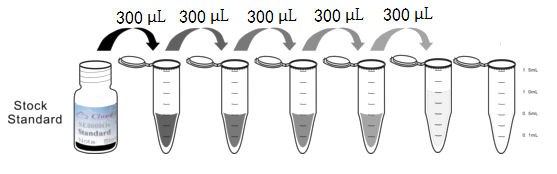
2. Preparation of standards, reagents and samples before the experiment;
3. Add 100μL standard or sample to each well, add 10μL magnetic beads, and incubate 120 minutes protect from light at 25°C on shaker;
4. Remove liquid on magnetic frame, add 100μL prepared Detection Reagent A. Incubate 60 minutes protect from light at 25°C on shaker;
5. Remove liquid on magnetic frame, add 100μL prepared Detection Reagent B, and incubate 30 minutes protect from light at 25°C on shaker;
6. Wash plate once on magnetic frame;
7. Add 100μL sheath fluid, swirl for 10 minutes, read on the machine.
Test principle
Anti-Caspase 9 (CASP9) ,etc. by CBA (Cytometric Bead Array) antibody was coated on the surface of magnetic beads, to make solid phase carrier. Standard or sample were added to the magnetic beads, respectively, in which Caspase 9 (CASP9) ,etc. by CBA (Cytometric Bead Array) was bound to the antibody connected to the solid phase carrier, and then biotinylated anti-Caspase 9 (CASP9) ,etc. by CBA (Cytometric Bead Array) antibodies were added. PE-labeled avidin was added. There is a positive correlation between the concentration of Caspase 9 (CASP9) ,etc. by CBA (Cytometric Bead Array) in the sample and corresponding value of MFI (Median Fluorescence Intensity). Flow Cytometer was used to determine and calculate the sample concentration.
Giveaways
Increment services
Citations
- Role of mitochondria in ciprofloxacin-induced apoptosis in murine sperm cells.Pubmed: 23420823
- Ursodeoxycholic Acid Ameliorates Apoptotic Cascade in the Rotenone Model of Parkinson’s Disease: Modulation of Mitochondrial PerturbationsPubmed:25502462
- Saikosaponin d induces cell death through caspase-3-dependent, caspase-3-independent andmitochondrial pathways in mammalian hepatic stellate cells.pubmed:27461108
- Stretch-induced apoptosis in rat alveolar epithelial cells is mediated by the intrinsic mitochondrial pathway.pubmed:28394655
- Saikosaponin a Induces Apoptosis through Mitochondria-Dependent Pathway in Hepatic Stellate Cellspubmed:28231747
- Docking Studies and Biological Evaluation of a Potential β-Secretase Inhibitor of 3-Hydroxyhericenone F from Hericium erinaceus.pubmed:28553224
- Diallyl sulfide alleviates cisplatin‐induced nephrotoxicity in rats via suppressing NF‐κB downstream inflammatory proteins and p53/Puma signalling pathwayPubmed:29266336
- Antihepatocarcinogenic activity of whey protein concentrate and lactoferrin in diethylnitrosamine‐treated male albino micePubmed: 31087429
- Synthesis of novel S-linked dihydroartemisinin derivatives and evaluation of their anticancer activityPubmed: 31216504
- Effects of different pulp-capping materials on cell death signaling pathways of lipoteichoic acid-stimulated human dental pulp stem cellsPubmed: 33206337
- Potentiation of the apoptotic signaling pathway in both the striatum and hippocampus and neurobehavioral impairment in rats exposed chronically to a low− dose of …Pubmed: 32915453
- Insights Into Protective Mechanisms of Dandelion Leaf Extract Against Cisplatin-Induced Nephrotoxicity in Rats: Role of Inhibitory Effect on Inflammatory and Apoptotic …
- Potential cardioprotective effect of octreotide via NOXs mitigation, mitochondrial biogenesis and MAPK/Erk1/2/STAT3/NF-kβ pathway attenuation in isoproterenol …Pubmed:35500641