


Multiplex Assay Kit for Cluster Of Differentiation 26 (CD26) ,etc. by CBA (Cytometric Bead Array) 

CD26; ADA; DPPIV; DPP-IV; DPP4; ADABP; ADCP2; TP103; Adenosine Deaminase Complexing Protein 2; T-cell activation antigen CD26; Dipeptidyl Peptidase IV
- UOM
- FOB US$ 393.00 US$ 408.00 US$ 431.00 US$ 461.00 US$ 491.00 US$ 537.00 US$ 605.00 US$ 756.00
- Quantity
Overview
Properties
- Product No.CMA884Hu
- Organism SpeciesHomo sapiens (Human) Same name, Different species.
- ApplicationsFLIA Kit for Antigen Detection.
Research use only - DownloadInstruction Manual
- CategorySignal transductionEnzyme & KinaseApoptosisTumor immunityEndocrinologyCardiovascular biology
Sign into your account
Share a new citation as an author
Upload your experimental result
Review

Contact us
Please fill in the blank.
-
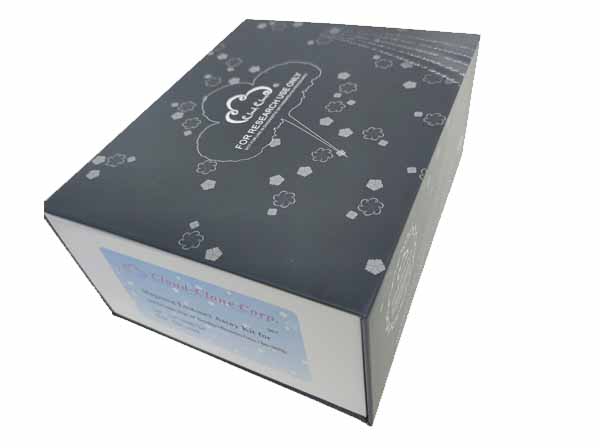 Packages (Simulation)
-
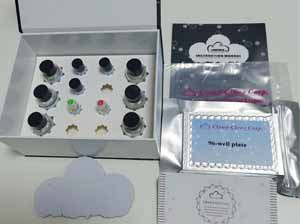 Packages (Simulation)
-
 ISO9001: 2008, ISO13485: 2003 Registered
Recovery
Matrices listed below were spiked with certain level of recombinant Cluster Of Differentiation 26 (CD26) ,etc. by CBA (Cytometric Bead Array) and the recovery rates were calculated by comparing the measured value to the expected amount of Cluster Of Differentiation 26 (CD26) ,etc. by CBA (Cytometric Bead Array) in samples.
| Matrix | Recovery range (%) | Average(%) |
| serum(n=5) | 91-99 | 96 |
| EDTA plasma(n=5) | 79-89 | 83 |
| heparin plasma(n=5) | 99-105 | 102 |
Precision
Intra-assay Precision (Precision within an assay): 3 samples with low, middle and high level Cluster Of Differentiation 26 (CD26) ,etc. by CBA (Cytometric Bead Array) were tested 20 times on one plate, respectively.
Inter-assay Precision (Precision between assays): 3 samples with low, middle and high level Cluster Of Differentiation 26 (CD26) ,etc. by CBA (Cytometric Bead Array) were tested on 3 different plates, 8 replicates in each plate.
CV(%) = SD/meanX100
Intra-Assay: CV<10%
Inter-Assay: CV<12%
Linearity
The linearity of the kit was assayed by testing samples spiked with appropriate concentration of Cluster Of Differentiation 26 (CD26) ,etc. by CBA (Cytometric Bead Array) and their serial dilutions. The results were demonstrated by the percentage of calculated concentration to the expected.
| Sample | 1:2 | 1:4 | 1:8 | 1:16 |
| serum(n=5) | 82-101% | 80-96% | 80-96% | 97-105% |
| EDTA plasma(n=5) | 98-105% | 96-104% | 85-101% | 85-101% |
| heparin plasma(n=5) | 82-104% | 90-98% | 94-101% | 94-101% |
Stability
The stability of kit is determined by the loss rate of activity. The loss rate of this kit is less than 5% within the expiration date under appropriate storage condition.
To minimize extra influence on the performance, operation procedures and lab conditions, especially room temperature, air humidity, incubator temperature should be strictly controlled. It is also strongly suggested that the whole assay is performed by the same operator from the beginning to the end.
Reagents and materials provided
| Reagents | Quantity | Reagents | Quantity |
Assay procedure summary
1. Add 200μL analysis buffer solution to each well of the plate for pre-wetting;
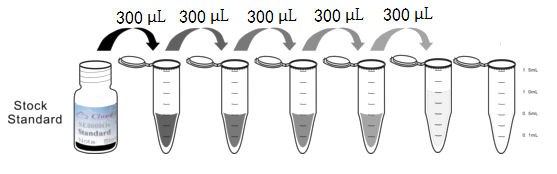
2. Preparation of standards, reagents and samples before the experiment;
3. Add 100μL standard or sample to each well, add 10μL magnetic beads, and incubate 120 minutes protect from light at 25°C on shaker;
4. Remove liquid on magnetic frame, add 100μL prepared Detection Reagent A. Incubate 60 minutes protect from light at 25°C on shaker;
5. Remove liquid on magnetic frame, add 100μL prepared Detection Reagent B, and incubate 30 minutes protect from light at 25°C on shaker;
6. Wash plate once on magnetic frame;
7. Add 100μL sheath fluid, swirl for 10 minutes, read on the machine.
Test principle
Anti-Cluster Of Differentiation 26 (CD26) ,etc. by CBA (Cytometric Bead Array) antibody was coated on the surface of magnetic beads, to make solid phase carrier. Standard or sample were added to the magnetic beads, respectively, in which Cluster Of Differentiation 26 (CD26) ,etc. by CBA (Cytometric Bead Array) was bound to the antibody connected to the solid phase carrier, and then biotinylated anti-Cluster Of Differentiation 26 (CD26) ,etc. by CBA (Cytometric Bead Array) antibodies were added. PE-labeled avidin was added. There is a positive correlation between the concentration of Cluster Of Differentiation 26 (CD26) ,etc. by CBA (Cytometric Bead Array) in the sample and corresponding value of MFI (Median Fluorescence Intensity). Flow Cytometer was used to determine and calculate the sample concentration.
Giveaways
Increment services
Citations
- Linagliptin Blocks Renal Damage in Type 1 Diabetic Rats by Suppressing Advanced Glycation End Products-Receptor AxisPubmed: 24710699
- MK-0626, a dipeptidyl peptidase-4 inhibitor, improves neovascularization by increasing both the number of circulating endothelial progenitor cells and endothelial nitric oxide synthetase expression.Pubmed:24059225
- Ghrelin inhibition restores glucose homeostasis in hepatocyte nuclear factor-1alpha (MODY3) deficient micePubMed: 25979074
- Expression and Clinical Significance of Serum Dipeptidyl Peptidase IV Chronic Obstructive Pulmonary DiseasePubmed:26992252
- Expression of recombinant human α-lactalbumin in milk of transgenic cloned pigs is sufficient to enhance intestinal growth and weight gain of suckling pigletsPubmed:26899869
- Hepatic Spheroids for Long-Term Toxicity Studiesaivt.2016.0016
- High circulating plasma dipeptidyl peptidase- 4 levels in non-obese Asian Indians with type 2 diabetes correlate with fasting insulin and LDL-C levels, triceps skinfolds, total intra-abdominal adipose tissue volume and presence of diabetes: a case–control study10.1136:bmjdrc-2017-000393
- Dipeptidyl peptidase-4 levels are increased and partially related to body fat distribution in patients with familial partial lipodystrophy type 2pubmed:28450900
- The effect of CD26‐deficiency on dipeptidyl peptidase 8 and 9 expression profiles in a mouse model of Crohn's diseasePubmed:29693275
- Rapid detection of urinary soluble intercellular adhesion molecule-1 for determination of lupus nephritis activityPubmed:29953010
- The novel adamantane derivatives as potential mediators of inflammation and neural plasticity in diabetes mice with cognitive impairmentPubmed:35468904