


Multiplex Assay Kit for Collagen Type I Alpha 1 (COL1a1) ,etc. by CBA (Cytometric Bead Array) 

COL-1A1; COL1-A1; COL1A-1; OI4; Collagen Alpha-1(I)chain
- UOM
- FOB US$ 427.00 US$ 443.00 US$ 468.00 US$ 501.00 US$ 534.00 US$ 583.00 US$ 657.00 US$ 821.00
- Quantity
Overview
Properties
- Product No.CMA350Ra
- Organism SpeciesRattus norvegicus (Rat) Same name, Different species.
- ApplicationsFLIA Kit for Antigen Detection.
Research use only - DownloadInstruction Manual
- CategoryMetabolic pathway
Sign into your account
Share a new citation as an author
Upload your experimental result
Review

Contact us
Please fill in the blank.
-
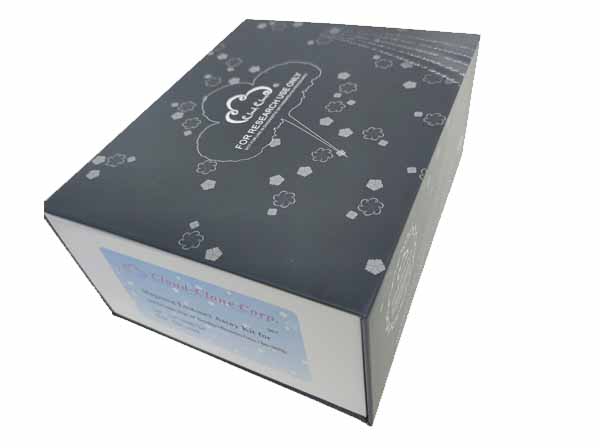 Packages (Simulation)
-
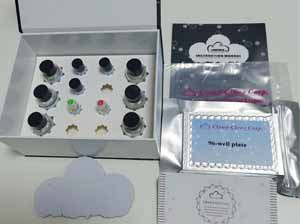 Packages (Simulation)
-
 ISO9001: 2008, ISO13485: 2003 Registered
Recovery
Matrices listed below were spiked with certain level of recombinant Collagen Type I Alpha 1 (COL1a1) ,etc. by CBA (Cytometric Bead Array) and the recovery rates were calculated by comparing the measured value to the expected amount of Collagen Type I Alpha 1 (COL1a1) ,etc. by CBA (Cytometric Bead Array) in samples.
| Matrix | Recovery range (%) | Average(%) |
| serum(n=5) | 91-98 | 94 |
| EDTA plasma(n=5) | 91-99 | 94 |
| heparin plasma(n=5) | 82-89 | 86 |
Precision
Intra-assay Precision (Precision within an assay): 3 samples with low, middle and high level Collagen Type I Alpha 1 (COL1a1) ,etc. by CBA (Cytometric Bead Array) were tested 20 times on one plate, respectively.
Inter-assay Precision (Precision between assays): 3 samples with low, middle and high level Collagen Type I Alpha 1 (COL1a1) ,etc. by CBA (Cytometric Bead Array) were tested on 3 different plates, 8 replicates in each plate.
CV(%) = SD/meanX100
Intra-Assay: CV<10%
Inter-Assay: CV<12%
Linearity
The linearity of the kit was assayed by testing samples spiked with appropriate concentration of Collagen Type I Alpha 1 (COL1a1) ,etc. by CBA (Cytometric Bead Array) and their serial dilutions. The results were demonstrated by the percentage of calculated concentration to the expected.
| Sample | 1:2 | 1:4 | 1:8 | 1:16 |
| serum(n=5) | 94-105% | 96-103% | 80-99% | 98-105% |
| EDTA plasma(n=5) | 79-105% | 95-103% | 92-101% | 91-99% |
| heparin plasma(n=5) | 94-101% | 91-105% | 92-101% | 81-101% |
Stability
The stability of kit is determined by the loss rate of activity. The loss rate of this kit is less than 5% within the expiration date under appropriate storage condition.
To minimize extra influence on the performance, operation procedures and lab conditions, especially room temperature, air humidity, incubator temperature should be strictly controlled. It is also strongly suggested that the whole assay is performed by the same operator from the beginning to the end.
Reagents and materials provided
| Reagents | Quantity | Reagents | Quantity |
Assay procedure summary
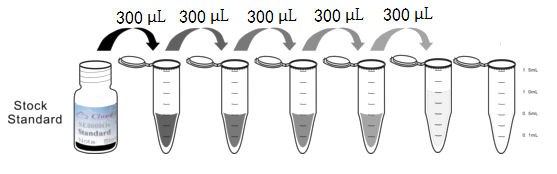
1. Add 200μL analysis buffer solution to each well of the plate for pre-wetting;
2. Preparation of standards, reagents and samples before the experiment;
3. Add 100μL standard or sample to each well, add 10μL magnetic beads, and incubate 120 minutes protect from light at 25°C on shaker;
4. Remove liquid on magnetic frame, add 100μL prepared Detection Reagent A. Incubate 60 minutes protect from light at 25°C on shaker;
5. Remove liquid on magnetic frame, add 100μL prepared Detection Reagent B, and incubate 30 minutes protect from light at 25°C on shaker;
6. Wash plate once on magnetic frame;
7. Add 100μL sheath fluid, swirl for 10 minutes, read on the machine.
Test principle
Anti-Collagen Type I Alpha 1 (COL1a1) ,etc. by CBA (Cytometric Bead Array) antibody was coated on the surface of magnetic beads, to make solid phase carrier. Standard or sample were added to the magnetic beads, respectively, in which Collagen Type I Alpha 1 (COL1a1) ,etc. by CBA (Cytometric Bead Array) was bound to the antibody connected to the solid phase carrier, and then biotinylated anti-Collagen Type I Alpha 1 (COL1a1) ,etc. by CBA (Cytometric Bead Array) antibodies were added. PE-labeled avidin was added. There is a positive correlation between the concentration of Collagen Type I Alpha 1 (COL1a1) ,etc. by CBA (Cytometric Bead Array) in the sample and corresponding value of MFI (Median Fluorescence Intensity). Flow Cytometer was used to determine and calculate the sample concentration.
Giveaways
Increment services
Citations
- Simvastatin-loaded porous implant surfaces stimulate preosteoblasts differentiation: an in vitro studyScienceDirect: S1079210410004919
- Osteoblast response to puerarin-loaded porous titanium surfaces: An in vitro studyWiley: source
- Age effects on extracellular matrix production of vocal fold scar fibroblasts in ratsPubmed: 24077847
- Vocal Fold Fibroblast Response to Growth Factor Treatment is Age Dependent: Results From an In Vitro Study Pubmed: 24495429
- Porphyromonas gingivalis LPS inhibits osteoblastic differentiation and promotes pro-inflammatory cytokine production in human periodontal ligament stem cells.Pubmed: 24370188
- Establishing principles of macromolecular crowding for in vitro fibrosis research of the vocal fold lamina propriaPubmed:25545625
- Allogeneic human dermal fibroblasts are viable in peripheral blood mononuclear co-cultureUnivmed:Source
- The vitamin D receptor agonist, calcipotriol, modulates fibrogenic pathways mitigating liver fibrosis in-vivo: An experimental study.pubmed:27477355
- Role of Gut-Derived Endotoxin on Type I Collagen Production in the Rat Pancreas after Chronic Alcohol Exposure pubmed:29121396
- Prevention of Diabetic Nephropathy by Modified Acidic Fibroblast Growth Factorpubmed:28768285
- Effect of TGFβ1, TGFβ3 and keratinocyte conditioned media on functional characteristics of dermal fibroblasts derived from reparative (Balb/c) and …Pubmed:29637306
- LOXL2, a copper-dependent monoamine oxidase, activates lung fibroblasts through the TGF-β/Smad pathwayPubmed: 30320382
- Association between Plasma HMGB-1 and Silicosis: A Case-Control StudyPubmed: 30558126
- Salivary proteins from dysplastic leukoplakia and oral squamous cell carcinoma and their potential for early detectionPubmed: 31706945
- Hesperidin inhibits the epithelial to mesenchymal transition induced by transforming growth factor-β1 in A549 cells through Smad signaling in the cytoplasm
- Platinum nanoparticles supported on functionalized hydroxyapatite: Anti-oxidant properties and bone cells response
- Inhibition of eEF2K synergizes with glutaminase inhibitors or 4EBP1 depletion to suppress growth of triple-negative breast cancer cells33911160
- Antiosteoporotic Nanohydroxyapatite Zoledronate Scaffold Seeded with Bone Marrow Mesenchymal Stromal Cells for Bone Regeneration: A 3D In Vitro ModelPubmed:35682677