


Multiplex Assay Kit for Interleukin 33 (IL33) ,etc. by CBA (Cytometric Bead Array) 

DV27; C9ORF26; IL1F11; NFHEV; Interleukin-1 Family, Member 11; Nuclear factor from high endothelial venules
Overview
Properties
- Product No.CMB980Mu
- Organism SpeciesMus musculus (Mouse) Same name, Different species.
- ApplicationsFLIA Kit for Antigen Detection.
Research use only - DownloadInstruction Manual
- CategoryCytokineInfection immunity
Sign into your account
Share a new citation as an author
Upload your experimental result
Review

Contact us
Please fill in the blank.
-
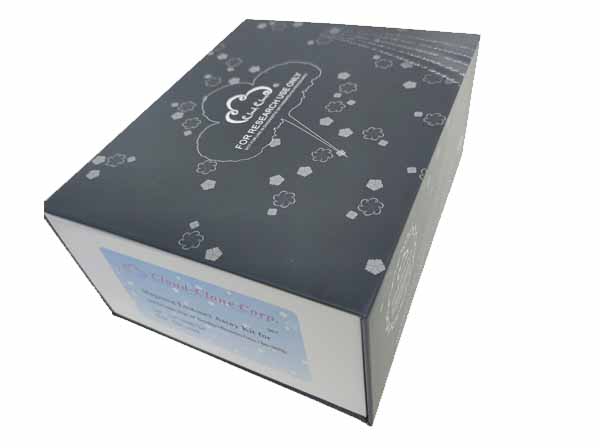 Packages (Simulation)
-
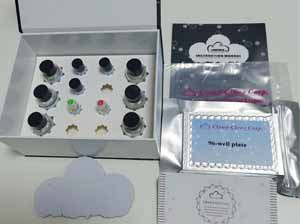 Packages (Simulation)
-
 ISO9001: 2008, ISO13485: 2003 Registered
Recovery
Matrices listed below were spiked with certain level of recombinant Interleukin 33 (IL33) ,etc. by CBA (Cytometric Bead Array) and the recovery rates were calculated by comparing the measured value to the expected amount of Interleukin 33 (IL33) ,etc. by CBA (Cytometric Bead Array) in samples.
| Matrix | Recovery range (%) | Average(%) |
| serum(n=5) | 93-102 | 97 |
| EDTA plasma(n=5) | 85-96 | 91 |
| heparin plasma(n=5) | 96-103 | 101 |
Precision
Intra-assay Precision (Precision within an assay): 3 samples with low, middle and high level Interleukin 33 (IL33) ,etc. by CBA (Cytometric Bead Array) were tested 20 times on one plate, respectively.
Inter-assay Precision (Precision between assays): 3 samples with low, middle and high level Interleukin 33 (IL33) ,etc. by CBA (Cytometric Bead Array) were tested on 3 different plates, 8 replicates in each plate.
CV(%) = SD/meanX100
Intra-Assay: CV<10%
Inter-Assay: CV<12%
Linearity
The linearity of the kit was assayed by testing samples spiked with appropriate concentration of Interleukin 33 (IL33) ,etc. by CBA (Cytometric Bead Array) and their serial dilutions. The results were demonstrated by the percentage of calculated concentration to the expected.
| Sample | 1:2 | 1:4 | 1:8 | 1:16 |
| serum(n=5) | 81-101% | 79-91% | 98-105% | 95-102% |
| EDTA plasma(n=5) | 80-91% | 88-102% | 80-90% | 87-101% |
| heparin plasma(n=5) | 84-101% | 97-105% | 78-101% | 95-105% |
Stability
The stability of kit is determined by the loss rate of activity. The loss rate of this kit is less than 5% within the expiration date under appropriate storage condition.
To minimize extra influence on the performance, operation procedures and lab conditions, especially room temperature, air humidity, incubator temperature should be strictly controlled. It is also strongly suggested that the whole assay is performed by the same operator from the beginning to the end.
Reagents and materials provided
| Reagents | Quantity | Reagents | Quantity |
Assay procedure summary
1. Add 200μL analysis buffer solution to each well of the plate for pre-wetting;
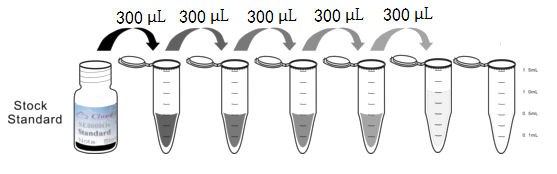
2. Preparation of standards, reagents and samples before the experiment;
3. Add 100μL standard or sample to each well, add 10μL magnetic beads, and incubate 120 minutes protect from light at 25°C on shaker;
4. Remove liquid on magnetic frame, add 100μL prepared Detection Reagent A. Incubate 60 minutes protect from light at 25°C on shaker;
5. Remove liquid on magnetic frame, add 100μL prepared Detection Reagent B, and incubate 30 minutes protect from light at 25°C on shaker;
6. Wash plate once on magnetic frame;
7. Add 100μL sheath fluid, swirl for 10 minutes, read on the machine.
Test principle
Anti-Interleukin 33 (IL33) ,etc. by CBA (Cytometric Bead Array) antibody was coated on the surface of magnetic beads, to make solid phase carrier. Standard or sample were added to the magnetic beads, respectively, in which Interleukin 33 (IL33) ,etc. by CBA (Cytometric Bead Array) was bound to the antibody connected to the solid phase carrier, and then biotinylated anti-Interleukin 33 (IL33) ,etc. by CBA (Cytometric Bead Array) antibodies were added. PE-labeled avidin was added. There is a positive correlation between the concentration of Interleukin 33 (IL33) ,etc. by CBA (Cytometric Bead Array) in the sample and corresponding value of MFI (Median Fluorescence Intensity). Flow Cytometer was used to determine and calculate the sample concentration.
Giveaways
Increment services
Citations
- Interleukin-33, matrix metalloproteinase-9, and tissue ınhibitor of matrix metalloproteinase-1 in myocardial infarctionPubMed: PMC3604606
- CXCL13 blockade attenuates lupus nephritis of MRL/lpr micePubMed: 26456520
- Epithelial Cell-Derived Cytokines Contribute to the Pathophysiology of Eosinophilic Chronic RhinosinusitisPubmed:26540312
- The Expression and Regulation of Interleukin-33 in Human Epidermal Keratinocytes: A New Mediator of Atopic Dermatitis and Its Possible Signaling Pathway.pubmed:27348082
- IL-33 circulating serum levels are increased in patients with non-segmental generalized vitiligopubmed:27388717
- Chrysin Protects Rat Kidney from Paracetamol-Induced Oxidative Stress, Inflammation, Apoptosis, and Autophagy: A Multi-Biomarker Approach. pubmed:28134775
- Association of IL-33, IL1RL1 gene polymorphisms with serum IL-33 levels and risk of asthma in adults and asthmatic bronchitis in children (Chinese)10.1080:13102818.2018.1471361
- Role of IL-33 and ST2 signaling and inflammatory responses in non-small cell lung cancer172341
- Group II innate lymphoid cells and microvascular dysfunction from pulmonary titanium dioxide nanoparticle exposurePubmed: 30413212
- Interleukin-33 serum levels in postmenopausal women with osteoporosisPubmed: 30846811
- Tumor-Derived Lactic Acid Contributes to the Paucity of Intratumoral ILC2sPubmed: 32101749
- Relationship of microbial profile with airway immune response in eosinophilic or neutrophilic inflammation of asthmaticsPubmed: 32141256
- Qingfei oral liquid downregulates TRPV1 expression to reduce airway inflammation and mucus hypersecretion injury caused by respiratory syncytial virus infection …
- Aggravation of Airway Inflammation in RSV-Infected Asthmatic Mice Following Infection-Induced Alteration of Gut Microbiota
- Inhibition of NF-κB/IL-33/ST2 Axis Ameliorates Acute Bronchiolitis Induced by Respiratory Syncytial Virus34395633
- Elevated Levels of IL-33, IL-17 and IL-25 Indicate the Progression from Chronicity to Hepatocellular Carcinoma in Hepatitis C Virus PatientsPubmed:35056005
- Dexmedetomidine Attenuates Hyperalgesia Induced By Brachial Plexus Root Avulsion By Restoring The GLT-1 Function Via PKA Signaling