


Multiplex Assay Kit for Pepsin (PP) ,etc. by CBA (Cytometric Bead Array) 

Overview
Properties
- Product No.CMA632Mu
- Organism SpeciesMus musculus (Mouse) Same name, Different species.
- ApplicationsFLIA Kit for Antigen Detection.
Research use only - DownloadInstruction Manual
- CategoryEnzyme & KinaseMetabolic pathwayTumor immunityGastroenterology
Sign into your account
Share a new citation as an author
Upload your experimental result
Review

Contact us
Please fill in the blank.
-
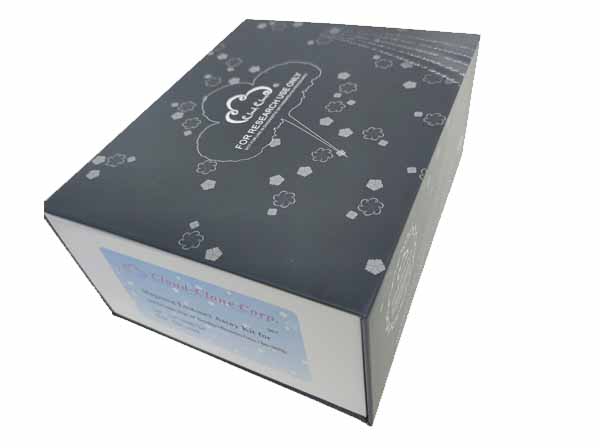 Packages (Simulation)
-
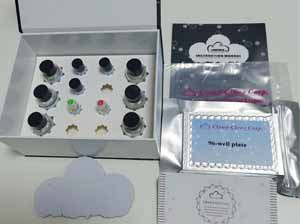 Packages (Simulation)
-
 ISO9001: 2008, ISO13485: 2003 Registered
Recovery
Matrices listed below were spiked with certain level of recombinant Pepsin (PP) ,etc. by CBA (Cytometric Bead Array) and the recovery rates were calculated by comparing the measured value to the expected amount of Pepsin (PP) ,etc. by CBA (Cytometric Bead Array) in samples.
| Matrix | Recovery range (%) | Average(%) |
| serum(n=5) | 81-95 | 91 |
| EDTA plasma(n=5) | 93-101 | 96 |
| heparin plasma(n=5) | 96-105 | 102 |
Precision
Intra-assay Precision (Precision within an assay): 3 samples with low, middle and high level Pepsin (PP) ,etc. by CBA (Cytometric Bead Array) were tested 20 times on one plate, respectively.
Inter-assay Precision (Precision between assays): 3 samples with low, middle and high level Pepsin (PP) ,etc. by CBA (Cytometric Bead Array) were tested on 3 different plates, 8 replicates in each plate.
CV(%) = SD/meanX100
Intra-Assay: CV<10%
Inter-Assay: CV<12%
Linearity
The linearity of the kit was assayed by testing samples spiked with appropriate concentration of Pepsin (PP) ,etc. by CBA (Cytometric Bead Array) and their serial dilutions. The results were demonstrated by the percentage of calculated concentration to the expected.
| Sample | 1:2 | 1:4 | 1:8 | 1:16 |
| serum(n=5) | 86-98% | 95-102% | 90-98% | 97-104% |
| EDTA plasma(n=5) | 99-105% | 78-88% | 80-98% | 79-92% |
| heparin plasma(n=5) | 92-101% | 78-101% | 88-103% | 86-98% |
Stability
The stability of kit is determined by the loss rate of activity. The loss rate of this kit is less than 5% within the expiration date under appropriate storage condition.
To minimize extra influence on the performance, operation procedures and lab conditions, especially room temperature, air humidity, incubator temperature should be strictly controlled. It is also strongly suggested that the whole assay is performed by the same operator from the beginning to the end.
Reagents and materials provided
| Reagents | Quantity | Reagents | Quantity |
| 96-well plate | 1 | Plate sealer for 96 wells | 4 |
| Pre-Mixed Standard | 2 | Standard Diluent | 1×20mL |
| Pre-Mixed Magnetic beads (22#:PP) | 1 | Analysis buffer | 1×20mL |
| Pre-Mixed Detection Reagent A | 1×120μL | Assay Diluent A | 1×12mL |
| Detection Reagent B (PE-SA) | 1×120μL | Assay Diluent B | 1×12mL |
| Sheath Fluid | 1×10mL | Wash Buffer (30 × concentrate) | 1×20mL |
| Instruction manual | 1 |
Assay procedure summary
1. Add 200μL analysis buffer solution to each well of the plate for pre-wetting;
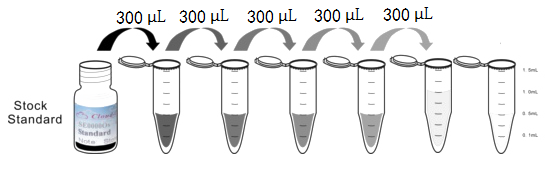
2. Preparation of standards, reagents and samples before the experiment;
3. Add 50μL standard or sample to each well, add 50μL prepared Detection Reagent A, add 10μL magnetic beads, and incubate 90 minutes protect from light at 25°C on shaker;
4. Remove liquid on magnetic frame, add 100μL prepared Detection Reagent B, and incubate 30 minutes protect from light at 25°C on shaker;
5. Wash plate once on magnetic frame;
6. Add 100μL sheath fluid, swirl for 10 minutes, read on the machine.
Test principle
Anti-Pepsin (PP) ,etc. by CBA (Cytometric Bead Array) antibody was coated on the surface of magnetic beads. A competitive inhibition reaction is launched between biotin labeled Pepsin (PP) ,etc. by CBA (Cytometric Bead Array) and unlabeled Pepsin (PP) ,etc. by CBA (Cytometric Bead Array) (Standards or samples) with the pre-coated antibody specific to Pepsin (PP) ,etc. by CBA (Cytometric Bead Array). PE-labeled avidin was added. The amount of bound PE conjugate is reverse proportional to the concentration of Pepsin (PP) ,etc. by CBA (Cytometric Bead Array) in the sample, the intensity of MFI developed is reverse proportional to the concentration of Pepsin (PP) ,etc. by CBA (Cytometric Bead Array) in the sample. Flow Cytometer was used to determine and calculate the sample concentration.
Giveaways
Increment services
Citations
- LEVEL OF PEPSIN AND BILE ACIDS IN THE SALIVA OF PATIENTS WITH GLOTTIS T1 CARCINOMASzd:Source
- Higher levels of total pepsin and bile acids in the saliva as a possible risk factor for early laryngeal cancerPubmed:Pmc4362607
- Pepsin and bile acids in saliva in patients with laryngopharyngeal reflux – a prospective comparative studyPubMed: 25516364
- Does Positioning Affect Tracheal Aspiration of Gastric Content in Ventilated Infants?PubMed: 25313850
- Detecting Laryngopharyngeal Reflux by Immunohistochemistry of Pepsin in the Biopsies of Vocal Fold Leukoplakiapubmed:28756936
- Label-Free Detection of Salivary Pepsin Using Gold Nanoparticle/Polypyrrole Nanocoral Modified Screen-Printed ElectrodePubmed:29882917
- Association between Pepsin in Bronchoalveolar Lavage Fluid and Prognosis of Chronic Fibrosing Interstitial Lung Disease
- Pulmonary aspiration in preschool children with cystic fibrosisPubmed: 30558606
- Association of Bile Acid and Pepsin Micro-aspiration with Chronic Obstructive Pulmonary Disease ExacerbationPubmed: 31423141
- Optimization of Saliva Collection and Immunochromatographic Detection of Salivary Pepsin for Point-of-Care Testing of Laryngopharyngeal RefluxPubmed: 31935973
- Presence of pepsin in laryngeal tissue and saliva in benign and malignant neoplasmsPubmed: 33103719
- Relationship Between Pepsin Expression and Dysplasia Grade in Patients With Vocal Cord LeukoplakiaPubmed: 32692278
- Association of pepsin and DNA damage in laryngopharyngeal reflux-related vocal fold polypsPubmed: 32889371
- The relationship between laryngopharyngeal reflux based on pepsin value and clinical characteristics of laryngeal cancer patients
- The Role of Salivary Pepsin in the Diagnosis of Gastroesophageal Reflux Disease (GERD) Evaluated Using High-Resolution Manometry and 24-Hour?¡33220027
- Pepsin properties, structure, and its accurate measurement: a narrative review
- The Impact of Laryngopharyngeal Reflux on Occurrence and Clinical Course of Recurrent Respiratory Papillomatosis34338331
- Bronchoalveolar lavage (BAL) amylase and pepsin levels as potential biomarkers of aspiration pneumoniaPubmed:35715334
- Transcutaneous Electrical Acustimulation Improved the Quality of Life in Patients With Diarrhea-Irritable Bowel SyndromePubmed:35088760