


Multiplex Assay Kit for Procollagen I C-Terminal Propeptide (PICP) ,etc. by CBA (Cytometric Bead Array) 

P1CP; C-Propeptide Of Type I Procollagen; Procollagen I Carboxy Terminal Propeptide
- UOM
- FOB US$ 393.00 US$ 408.00 US$ 431.00 US$ 461.00 US$ 491.00 US$ 537.00 US$ 605.00 US$ 756.00
- Quantity
Overview
Properties
- Product No.CMA570Hu
- Organism SpeciesHomo sapiens (Human) Same name, Different species.
- ApplicationsFLIA Kit for Antigen Detection.
Research use only - DownloadInstruction Manual
- CategoryMetabolic pathwayHepatologyBone metabolism
Sign into your account
Share a new citation as an author
Upload your experimental result
Review

Contact us
Please fill in the blank.
-
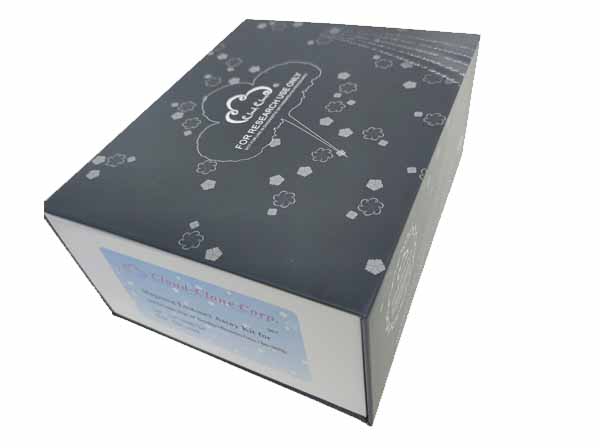 Packages (Simulation)
-
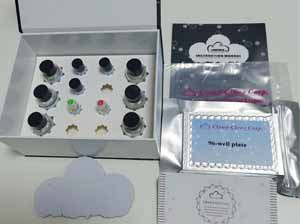 Packages (Simulation)
-
 ISO9001: 2008, ISO13485: 2003 Registered
Recovery
Matrices listed below were spiked with certain level of recombinant Procollagen I C-Terminal Propeptide (PICP) ,etc. by CBA (Cytometric Bead Array) and the recovery rates were calculated by comparing the measured value to the expected amount of Procollagen I C-Terminal Propeptide (PICP) ,etc. by CBA (Cytometric Bead Array) in samples.
| Matrix | Recovery range (%) | Average(%) |
| serum(n=5) | 98-105 | 101 |
| EDTA plasma(n=5) | 78-99 | 93 |
| heparin plasma(n=5) | 87-97 | 93 |
Precision
Intra-assay Precision (Precision within an assay): 3 samples with low, middle and high level Procollagen I C-Terminal Propeptide (PICP) ,etc. by CBA (Cytometric Bead Array) were tested 20 times on one plate, respectively.
Inter-assay Precision (Precision between assays): 3 samples with low, middle and high level Procollagen I C-Terminal Propeptide (PICP) ,etc. by CBA (Cytometric Bead Array) were tested on 3 different plates, 8 replicates in each plate.
CV(%) = SD/meanX100
Intra-Assay: CV<10%
Inter-Assay: CV<12%
Linearity
The linearity of the kit was assayed by testing samples spiked with appropriate concentration of Procollagen I C-Terminal Propeptide (PICP) ,etc. by CBA (Cytometric Bead Array) and their serial dilutions. The results were demonstrated by the percentage of calculated concentration to the expected.
| Sample | 1:2 | 1:4 | 1:8 | 1:16 |
| serum(n=5) | 89-99% | 80-93% | 92-101% | 88-96% |
| EDTA plasma(n=5) | 80-97% | 79-95% | 81-89% | 93-105% |
| heparin plasma(n=5) | 96-103% | 80-101% | 78-101% | 86-94% |
Stability
The stability of kit is determined by the loss rate of activity. The loss rate of this kit is less than 5% within the expiration date under appropriate storage condition.
To minimize extra influence on the performance, operation procedures and lab conditions, especially room temperature, air humidity, incubator temperature should be strictly controlled. It is also strongly suggested that the whole assay is performed by the same operator from the beginning to the end.
Reagents and materials provided
| Reagents | Quantity | Reagents | Quantity |
Assay procedure summary
1. Add 200μL analysis buffer solution to each well of the plate for pre-wetting;
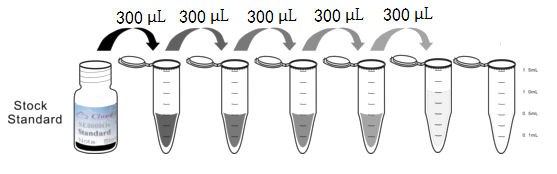
2. Preparation of standards, reagents and samples before the experiment;
3. Add 100μL standard or sample to each well, add 10μL magnetic beads, and incubate 120 minutes protect from light at 25°C on shaker;
4. Remove liquid on magnetic frame, add 100μL prepared Detection Reagent A. Incubate 60 minutes protect from light at 25°C on shaker;
5. Remove liquid on magnetic frame, add 100μL prepared Detection Reagent B, and incubate 30 minutes protect from light at 25°C on shaker;
6. Wash plate once on magnetic frame;
7. Add 100μL sheath fluid, swirl for 10 minutes, read on the machine.
Test principle
Anti-Procollagen I C-Terminal Propeptide (PICP) ,etc. by CBA (Cytometric Bead Array) antibody was coated on the surface of magnetic beads, to make solid phase carrier. Standard or sample were added to the magnetic beads, respectively, in which Procollagen I C-Terminal Propeptide (PICP) ,etc. by CBA (Cytometric Bead Array) was bound to the antibody connected to the solid phase carrier, and then biotinylated anti-Procollagen I C-Terminal Propeptide (PICP) ,etc. by CBA (Cytometric Bead Array) antibodies were added. PE-labeled avidin was added. There is a positive correlation between the concentration of Procollagen I C-Terminal Propeptide (PICP) ,etc. by CBA (Cytometric Bead Array) in the sample and corresponding value of MFI (Median Fluorescence Intensity). Flow Cytometer was used to determine and calculate the sample concentration.
Giveaways
Increment services
Citations
- Dyslipidemic high-fat diet affects adversely bone metabolism in mice associated with impaired antioxidant capacityScienceDirect: S0899900709004717
- Serum markers of deranged myocardial collagen turnover: their relation to malignant ventricular arrhythmias in cardioverter-defibrillator recipients with heart failure.PubMed: 23067911
- Circulating biomarkers of collagen metabolism in arterial hypertension: relevance of target organ damagePubmed: 23615327
- Cdkn1a is a key mediator of rat pancreatic stellate cell senescencePubmed: 23719597
- Relation of burden of myocardial fibrosis to malignant ventricular arrhythmias and outcomes in Fabry diseasePubmed:25073565
- An NMR Metabolomic Study on the Effect of Alendronate in Ovariectomized MicePubmed:25184758
- The Anti-Osteoanabolic Function of Sclerostin is Blunted in Mice Carrying a High Bone Mass Mutation of Lrp5Pubmed:25640331
- The active role of osteoporosis in the interaction between osteoblasts and bone metastasesPubMed: 26057367
- Consumption of vitamin D2PubMed: 25792284
- Bilaterale Kommunikation zwischen Osteoblasten und Osteoklastenvolltexte:2016
- Fibrosis of extracellular matrix is related to the duration of the disease but is unrelated to the dynamics of collagen metabolism in dilated cardiomyopathypubmed:27516211
- Left ventricular reverse remodeling is not related to biopsy-detected extracellular matrix fibrosis and serum markers of fibrosis in dilated cardiomyopathy, regardless of the definition used for LVRRpubmed:28004175
- The association between insulin-like growth factor 1 (IGF-1), IGF-binding proteins (IGFBPs), and the carboxyterminal propeptide of type I procollagen (PICP) in pre- and postmenopausal women with rheumatoid arthritis.pubmed:27775453
- Effect of montelukast on markers of airway remodeling in children withasthma.pubmed:27657514
- The association between insulin-like growth factor 1 (IGF-1), IGF-binding proteins (IGFBPs), and the carboxyterminal propeptide of type I procollagen (PICP) in pre- and postmenopausal women with rheumatoid arthritisloi:irhe20
- Conditional Mouse Models Support the Role of SLC39A14 (ZIP14) in Hyperostosis Cranialis Interna and in Bone HomeostasisISBN: 978-94-6299-582-6
- Endothelial‑to‑mesenchymal transition in human idiopathic dilated cardiomyopathypubmed:29115553
- Age-related changes in biochemical bone profile in thalassemic childrenpubmed:28967496
- Left ventricular reverse remodeling is not related to biopsy‑detected extracellular matrix fibrosis and serum markers of fibrosis in dilated cardiomyopathy, regardless of the definition used for LVRR10.1007/s00380-016-0930-y
- The Lrp4 R1170Q homozygous knock‐in mouse recapitulates the bone phenotype of sclerosteosis in humanspubmed:28477420
- 12-month patterns of serum markers of collagen synthesis, transforming growth factor and connective tissue growth factor are similar in new-onset and chronic dilated cardiomyopathy in patients both with and without cardiac fibrosis.pubmed:28460256
- Prognostic value of fibrosis-related markers in dilated cardiomyopathy: A link between osteopontin and cardiovascular events.pubmed:29120858
- Mutations That Alter the Carboxy‐Terminal‐Propeptide Cleavage Site of the Chains of Type I Procollagen Are Associated With a Unique Osteogenesis Imperfecta …Pubmed:29669177
- Assessment of myocardial fibrosis by late gadolinium enhancement imaging and biomarkers of collagen metabolism in chronic rheumatic mitral regurgitation.Pubmed:29443354
- DNA methylation regulates α‐smooth muscle actin expression during cardiac fibroblast differentiationPubmed: 30362530
- Altered serum levels of type I collagen turnover indicators accompanied by IL-6 and IL-8 release in stable COPDPubmed: 30655663
- Low fibrosis biomarker levels predict cardiac resynchronization therapy responsePubmed: 30988339
- Agonist-induced activation of the S1P receptor 2 constitutes a novel osteoanabolic therapy for the treatment of osteoporosis in micePubmed: 31028959
- Deficiency of sphingosine-1-phosphate receptor 3 does not affect the skeletal phenotype of mice lacking sphingosine-1-phosphate lyasePubmed: 31314788
- Mice lacking plastin-3 display a specific defect of cortical bone acquisitionPubmed: 31678489
- Type 2 Diabetes Mellitus and Chronic Heart Failure with Midrange and Preserved Ejection Fraction: A Focus on Serum Biomarkers of FibrosisPubmed: 33224989
- Piezo1 Inactivation in Chondrocytes Impairs Trabecular Bone FormationPubmed: 33180356
- Microbiome changes in patients with chronic heart failure with preserved ejection fraction correlate with fibrosis markers: Description of a Russian cohort
- Ассоциации толщины эпикардиального жира и циркулирующих маркеров фиброза миокарда у пациентов с инфарктом миокарда
- Early diagnosis of myocardial fibrosis in patients with epicardial obesity
- Association between Markers of Fibrosis and Heart Failure Incidence in Patients with Type 2 Diabetes Mellitus34778465
- Extra Cellular Matrix Deposition and Assembly in Dermis Spheroids34321901
- Dual integrin αvβ3 and αvβ5 blockade attenuates cardiac dysfunction by reducing fibrosis in a rat model of doxorubicin-induced cardiomyopathy34296634
- Effects of 8-week increment aerobic exercise program on bone metabolism and body composition in young non-athletesPubmed:35141785
- Simple Predictors for Cardiac Fibrosis in Patients with Type 2 Diabetes Mellitus: The Role of Circulating Biomarkers and Pulse Wave VelocityPubmed:35628969