


Multiplex Assay Kit for Prothrombin Fragment 1+2 (F1+2) ,etc. by CBA (Cytometric Bead Array) 

Overview
Properties
- Product No.CMA710Mu
- Organism SpeciesMus musculus (Mouse) Same name, Different species.
- ApplicationsFLIA Kit for Antigen Detection.
Research use only - DownloadInstruction Manual
- Category
Sign into your account
Share a new citation as an author
Upload your experimental result
Review

Contact us
Please fill in the blank.
-
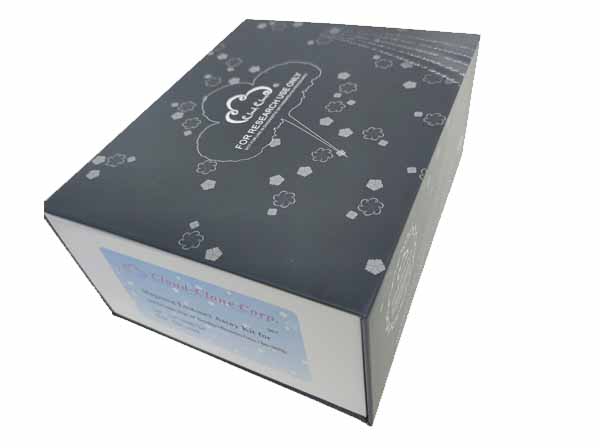 Packages (Simulation)
-
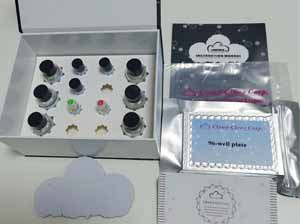 Packages (Simulation)
-
 ISO9001: 2008, ISO13485: 2003 Registered
Recovery
Matrices listed below were spiked with certain level of recombinant Prothrombin Fragment 1+2 (F1+2) ,etc. by CBA (Cytometric Bead Array) and the recovery rates were calculated by comparing the measured value to the expected amount of Prothrombin Fragment 1+2 (F1+2) ,etc. by CBA (Cytometric Bead Array) in samples.
| Matrix | Recovery range (%) | Average(%) |
| serum(n=5) | 93-101 | 97 |
| EDTA plasma(n=5) | 78-97 | 83 |
| heparin plasma(n=5) | 88-97 | 93 |
Precision
Intra-assay Precision (Precision within an assay): 3 samples with low, middle and high level Prothrombin Fragment 1+2 (F1+2) ,etc. by CBA (Cytometric Bead Array) were tested 20 times on one plate, respectively.
Inter-assay Precision (Precision between assays): 3 samples with low, middle and high level Prothrombin Fragment 1+2 (F1+2) ,etc. by CBA (Cytometric Bead Array) were tested on 3 different plates, 8 replicates in each plate.
CV(%) = SD/meanX100
Intra-Assay: CV<10%
Inter-Assay: CV<12%
Linearity
The linearity of the kit was assayed by testing samples spiked with appropriate concentration of Prothrombin Fragment 1+2 (F1+2) ,etc. by CBA (Cytometric Bead Array) and their serial dilutions. The results were demonstrated by the percentage of calculated concentration to the expected.
| Sample | 1:2 | 1:4 | 1:8 | 1:16 |
| serum(n=5) | 88-96% | 90-105% | 87-95% | 80-94% |
| EDTA plasma(n=5) | 99-105% | 79-103% | 95-105% | 80-93% |
| heparin plasma(n=5) | 91-103% | 99-105% | 85-96% | 87-101% |
Stability
The stability of kit is determined by the loss rate of activity. The loss rate of this kit is less than 5% within the expiration date under appropriate storage condition.
To minimize extra influence on the performance, operation procedures and lab conditions, especially room temperature, air humidity, incubator temperature should be strictly controlled. It is also strongly suggested that the whole assay is performed by the same operator from the beginning to the end.
Reagents and materials provided
| Reagents | Quantity | Reagents | Quantity |
Assay procedure summary
1. Add 200μL analysis buffer solution to each well of the plate for pre-wetting;
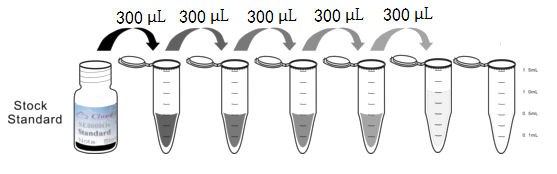
2. Preparation of standards, reagents and samples before the experiment;
3. Add 100μL standard or sample to each well, add 10μL magnetic beads, and incubate 120 minutes protect from light at 25°C on shaker;
4. Remove liquid on magnetic frame, add 100μL prepared Detection Reagent A. Incubate 60 minutes protect from light at 25°C on shaker;
5. Remove liquid on magnetic frame, add 100μL prepared Detection Reagent B, and incubate 30 minutes protect from light at 25°C on shaker;
6. Wash plate once on magnetic frame;
7. Add 100μL sheath fluid, swirl for 10 minutes, read on the machine.
Test principle
Anti-Prothrombin Fragment 1+2 (F1+2) ,etc. by CBA (Cytometric Bead Array) antibody was coated on the surface of magnetic beads, to make solid phase carrier. Standard or sample were added to the magnetic beads, respectively, in which Prothrombin Fragment 1+2 (F1+2) ,etc. by CBA (Cytometric Bead Array) was bound to the antibody connected to the solid phase carrier, and then biotinylated anti-Prothrombin Fragment 1+2 (F1+2) ,etc. by CBA (Cytometric Bead Array) antibodies were added. PE-labeled avidin was added. There is a positive correlation between the concentration of Prothrombin Fragment 1+2 (F1+2) ,etc. by CBA (Cytometric Bead Array) in the sample and corresponding value of MFI (Median Fluorescence Intensity). Flow Cytometer was used to determine and calculate the sample concentration.
Giveaways
Increment services
Citations
- Disseminated intravascular coagulation or acute coagulopathy of trauma shock early after trauma? An observational studyBioMed: cc10553
- Changes in thrombin generation, fibrinolysis, platelet and endothelial cell activity, and inflammation following endovascular abdominal aortic aneurysm repairScienceDirect: S0741521411018568
- High levels of soluble VEGF receptor 1 early after trauma are associated with shock, sympathoadrenal activation, glycocalyx degradation and inflammation in severely injured patients: a prospective studySjtrem:1757-7241
- High sCD40L levels early after trauma are associated with enhanced shock, sympathoadrenal activation, tissue and endothelial damage, coagulopathy and mortalityWiley: source
- Evaluation of autologous plasma skin test in patients with chronic idiopathic urticariaPubMed: 21910697
- Diet Modulates Endogenous Thrombin Generation, A Biological Estimate of Thrombosis Risk, Independently of the Metabolic StatusPubMed: 22859493
- Medium-term effect of endovascular and open abdominal aortic aneurysm repair on thrombin generation and fibrinolysisPubMed: 23140799
- Markers of Thrombogenesis and Fibrinolysis and Their Relation to Inflammation and Endothelial Activation in Patients with Idiopathic Pulmonary Arterial HypertensionPlosone: Source
- Effect of endovascular and open abdominal aortic aneurysm repair on thrombin generation and fibrinolysisPubmed: 23140799
- Clinical impact of factor V Leiden, prothrombin G20210A, and MTHFR C677T mutations among sickle cell disease patients of Central IndiaPubmed: 23992124
- Study the association of adiponectin with inflammation and hypercoagulability in case of type 2 diabetic subjects with renal dysfunctionTandfonline:Source
- An ex vivo evaluation of blood coagulation and thromboresistance of two extracorporeal circuit coatings with reduced and full heparin dosePubmed:24632424
- Ex vivo simulation of cardiopulmonary bypass with human blood for hemocompatibility testingPubMed: 26243277
- Comparison of the Effect of Dabigatran and Dalteparin on Thrombus Stability in a Murine Model of Venous ThromboembolismPubMed: 26514101
- Thrombin activatable fibrinolysis inhibitor (TAFI), tissue factor pathway inhibitor (TFPI), and prothrombin fragment 1+2 levels in patients with advanced colorectal cancer aot:AOT_49_1_6_12.pdf
- Perioperative thrombocytopenia predicts poor outcome in patients undergoing transcatheter aortic valve implantationpubmed:29145170
- The causes of thrombocytopenia after transcatheter aortic valve implantationpubmed:28582640
- Elevations of Thrombotic Biomarkers in Hemoglobin H DiseasePubmed:29402840
- The cerebral thrombin system is activated after intracerebral hemorrhage and contributes to secondary lesion growth and poor neurological outcome in C57Bl/6 micePubmed: 31830857
- Enhanced Fibrin-Lysis in Grade-1 Dengue Haemorrhagic Fever
- The impact of anti-endothelial cell antibodies (AECAs) on the development of blood vessel damage in patients with systemic lupus erythematosus: the preliminary …Pubmed:35284968