


Multiplex Assay Kit for Tyrosine Hydroxylase (TH) ,etc. by CBA (Cytometric Bead Array) 

TYH; DYT5b; Tyrosine 3-Monooxygenase; Dystonia 14
- UOM
- FOB US$ 415.00 US$ 431.00 US$ 455.00 US$ 487.00 US$ 519.00 US$ 567.00 US$ 638.00 US$ 798.00
- Quantity
Overview
Properties
- Product No.CMB438Hu
- Organism SpeciesHomo sapiens (Human) Same name, Different species.
- ApplicationsFLIA Kit for Antigen Detection.
Research use only - DownloadInstruction Manual
- CategorySignal transductionEnzyme & KinaseNeuro scienceHormone metabolism
Sign into your account
Share a new citation as an author
Upload your experimental result
Review

Contact us
Please fill in the blank.
-
 Packages (Simulation)
-
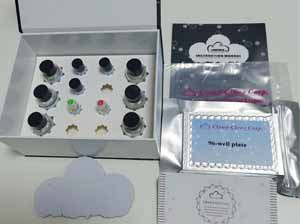 Packages (Simulation)
-
 ISO9001: 2008, ISO13485: 2003 Registered
Recovery
Matrices listed below were spiked with certain level of recombinant Tyrosine Hydroxylase (TH) ,etc. by CBA (Cytometric Bead Array) and the recovery rates were calculated by comparing the measured value to the expected amount of Tyrosine Hydroxylase (TH) ,etc. by CBA (Cytometric Bead Array) in samples.
| Matrix | Recovery range (%) | Average(%) |
| serum(n=5) | 96-104 | 101 |
| EDTA plasma(n=5) | 88-99 | 91 |
| heparin plasma(n=5) | 99-105 | 102 |
Precision
Intra-assay Precision (Precision within an assay): 3 samples with low, middle and high level Tyrosine Hydroxylase (TH) ,etc. by CBA (Cytometric Bead Array) were tested 20 times on one plate, respectively.
Inter-assay Precision (Precision between assays): 3 samples with low, middle and high level Tyrosine Hydroxylase (TH) ,etc. by CBA (Cytometric Bead Array) were tested on 3 different plates, 8 replicates in each plate.
CV(%) = SD/meanX100
Intra-Assay: CV<10%
Inter-Assay: CV<12%
Linearity
The linearity of the kit was assayed by testing samples spiked with appropriate concentration of Tyrosine Hydroxylase (TH) ,etc. by CBA (Cytometric Bead Array) and their serial dilutions. The results were demonstrated by the percentage of calculated concentration to the expected.
| Sample | 1:2 | 1:4 | 1:8 | 1:16 |
| serum(n=5) | 78-98% | 86-104% | 80-96% | 94-102% |
| EDTA plasma(n=5) | 94-103% | 90-101% | 89-96% | 93-103% |
| heparin plasma(n=5) | 80-98% | 81-103% | 93-101% | 91-98% |
Stability
The stability of kit is determined by the loss rate of activity. The loss rate of this kit is less than 5% within the expiration date under appropriate storage condition.
To minimize extra influence on the performance, operation procedures and lab conditions, especially room temperature, air humidity, incubator temperature should be strictly controlled. It is also strongly suggested that the whole assay is performed by the same operator from the beginning to the end.
Reagents and materials provided
| Reagents | Quantity | Reagents | Quantity |
Assay procedure summary
1. Add 200μL analysis buffer solution to each well of the plate for pre-wetting;
2. Preparation of standards, reagents and samples before the experiment;
3. Add 100μL standard or sample to each well, add 10μL magnetic beads, and incubate 120 minutes protect from light at 25°C on shaker;
4. Remove liquid on magnetic frame, add 100μL prepared Detection Reagent A. Incubate 60 minutes protect from light at 25°C on shaker;
5. Remove liquid on magnetic frame, add 100μL prepared Detection Reagent B, and incubate 30 minutes protect from light at 25°C on shaker;
6. Wash plate once on magnetic frame;
7. Add 100μL sheath fluid, swirl for 10 minutes, read on the machine.
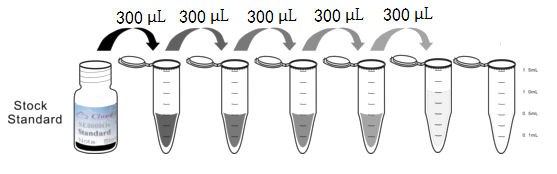
Test principle
Anti-Tyrosine Hydroxylase (TH) ,etc. by CBA (Cytometric Bead Array) antibody was coated on the surface of magnetic beads, to make solid phase carrier. Standard or sample were added to the magnetic beads, respectively, in which Tyrosine Hydroxylase (TH) ,etc. by CBA (Cytometric Bead Array) was bound to the antibody connected to the solid phase carrier, and then biotinylated anti-Tyrosine Hydroxylase (TH) ,etc. by CBA (Cytometric Bead Array) antibodies were added. PE-labeled avidin was added. There is a positive correlation between the concentration of Tyrosine Hydroxylase (TH) ,etc. by CBA (Cytometric Bead Array) in the sample and corresponding value of MFI (Median Fluorescence Intensity). Flow Cytometer was used to determine and calculate the sample concentration.
Giveaways
Increment services
Citations
- 1, 25-dyhydroxyvitamin D3 Attenuates l-DOPA-Induced Neurotoxicity in Neural Stem CellsPubmed:25102940
- Genetic Diagnosis of Two Dopa-Responsive Dystonia Families by Exome SequencingPubmed:25181484
- Acetyl-l-carnitine protects dopaminergic nigrostriatal pathway in 6-hydroxydopamine-induced model of Parkinson's disease in the rat.pubmed:28199883
- Elevated blood plasma levels of epinephrine, norepinephrine, tyrosine hydroxylase, TGFβ1, and TNFα associated with high-altitude pulmonary edema in an Indian population.pubmed:27540296
- Silencing salusin-β attenuates cardiovascular remodeling and hypertension in spontaneously hypertensive rats.pubmed:28230187
- Vaccarin administration ameliorates hypertension and cardiovascular remodeling in renovascular hypertensive ratspubmed:28681939
- Multigenerational disruption of the thyroid endocrine system in marine medaka after a life-cycle exposure to perfluorobutanesulfonatePubmed:29565584
- Cilostazol Mediated Nurr1 and Autophagy Enhancement: Neuroprotective Activity in Rat Rotenone PD ModelPubmed:29429051
- Tetrabromobisphenol A caused neurodevelopmental toxicity via disrupting thyroid hormones in zebrafish larvaePubmed:29407805
- The Effect of Recombinant Tyrosine Hydroxylase Expression on the Neurogenic Differentiation Potency of Mesenchymal Stem CellsPubmed:29656620
- Montelukast attenuates rotenone-induced microglial activation/p38 MAPK expression in rats: Possible role of its antioxidant, anti-inflammatory and antiapoptotic effectsPubmed: 30222980
- Silencing salusin β ameliorates heart failure in aged spontaneously hypertensive rats by ROS-relative MAPK/NF-κB pathways in the paraventricular nucleusPubmed: 30581101
- Hydroxychloroquine antiparkinsonian potential: Nurr1 modulation versus autophagy inhibition
- Perfluoropolyether carboxylic acids (novel alternatives to PFOA) impair zebrafish posterior swim bladder development via thyroid hormone disruptionPubmed: 31733528
- Embryonic exposure to pentabromobenzene inhibited the inflation of posterior swim bladder in zebrafish larvaePubmed: 31935612
- Nose to brain delivery of rotigotine loaded chitosan nanoparticles in human SH-SY5Y neuroblastoma cells and animal model of Parkinson's diseasePubmed: 32084576
- Thyroid disruption and developmental toxicity caused by Cd2+ in Schizopygopsis younghusbandi larvaePubmed: 32344129
- Selection of Cells for Parkinson's Disease Cell-Therapy
- Effects of SiO2 nanoparticles on the uptake of tetrabromobisphenol A and its impact on the thyroid endocrine system in zebrafish larvae33385677
- Tocotrienols protect differentiated SH-SY5Y human neuroblastoma cells against 6-hydroxydopamine-induced cytotoxicity by ameliorating dopamine biosynthesis and …Pubmed:35065349
- Omarigliptin attenuates rotenone-induced Parkinson's disease in rats: Possible role of oxidative stress, endoplasmic reticulum stress and immune modulationPubmed:35439590
- Unravelling the neuroprotective mechanisms of carotenes in differentiated human neural cells: biochemical and proteomic approachesPubmed:35415676
- Parental and transgenerational impairments of thyroid endocrine system in zebrafish by 2, 4, 6-tribromophenol