


Active Alkaline Phosphatase, Tissue-nonspecific (ALPL) 

HOPS; AP-TNAP; TNSALP; Alkaline Phosphatase,Tissue-Nonspecific Isozyme; Alkaline Phosphatase, Liver/Bone/Kidney
- UOM
- FOB US$ 334.00 US$ 836.00 US$ 1,672.00 US$ 5,016.00 US$ 12,540.00
- Quantity
Overview
Properties
- Product No.APB091Bo61
- Organism SpeciesBos taurus; Bovine (Cattle) Same name, Different species.
- ApplicationsCell culture; Activity Assays.
Research use only - Downloadn/a
- CategoryEnzyme & KinaseMetabolic pathwayHepatologyBone metabolism
- Buffer FormulationPBS, pH7.4, containing 0.01% SKL, 1mM DTT, 5% Trehalose and Proclin300.
- Traits Freeze-dried powder, Purity > 90%
- Isoelectric Point6.8
Sign into your account
Share a new citation as an author
Upload your experimental result
Review

Contact us
Please fill in the blank.
-
 Packages (Simulation)
-
 Packages (Simulation)
-
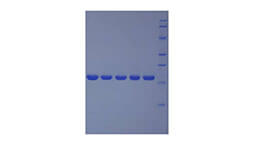
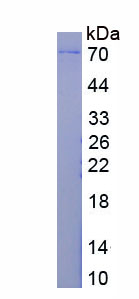 SDS-PAGE
-
 ISO9001: 2008, ISO13485: 2003 Registered
Activity test
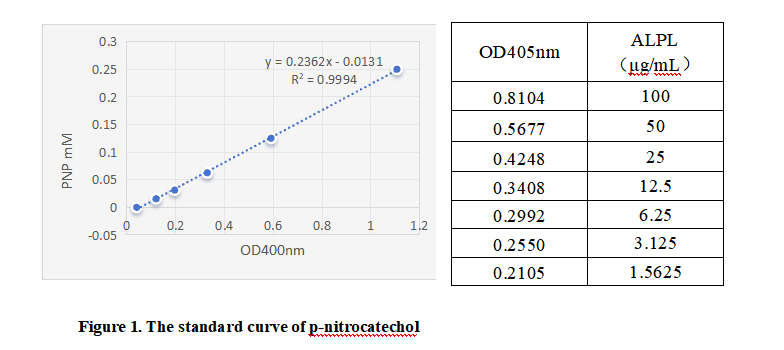
Alkaline phosphatase tissue-nonspecific (ALPL) is a membrane-bound glycoprotein expressed in bone, liver, kidney and other tissues. It corely mediates skeletal and dental mineralization, regulates vitamin B6 metabolism and adaptive thermogenesis. Mutations in its gene cause hypophosphatasia, leading to defective skeletal mineralization.This method is based on the principle that alkaline phosphatase can catalyze the hydrolysis of p-nitrophenyl phosphate (PNPP) to produce p-nitrophenol, which has a maximum absorption peak at 405 nm, and the activity of alkaline phosphatase is determined by quantifying the generated p-nitrophenol. First, perform 2-fold serial dilution of the protein starting from 100 μg/mL to prepare 7 gradient concentrations with an additional buffer control group, then dilute the PNPP substrate to 20 mM with the assay buffer (50 mM Tris, 1 mM MgCl2, pH 9.0), add 50 μL of the diluted protein sample and 50 μL of 20 mM PNPP substrate to each well of the microplate, and conduct kinetic absorbance reading at 405 nm for 5 consecutive minutes. For the preparation of the standard curve, first dilute the p-nitrophenol standard to 1 mM with the assay buffer, then make 2-fold serial dilutions to obtain 7 gradient concentrations, add 100 μL of each standard dilution to the corresponding wells, set a blank control well with only 100 μL of assay buffer, and finally measure the absorbance of all wells at 400 nm.<br/>One unit of enzyme activity is defined as the 1 μg of enzyme required to hydrolyzes 1pmol PNPP to produce PNP in 1 min at 37°C. The specific activity of recombinant cattle ALPL is 1146 pmol/min/µg.<br/>Specific Activity (pmol/min/µg)=<br/>△OD=Adjusted for Substrate Blank<br/>F=Conversion Factor(convert from standard curve of p-nitrocatechol)<br/>T= Time<br/>N=Amount of enzyme
Usage
Reconstitute in 10mM PBS (pH7.4) to a concentration of 0.1-1.0 mg/mL. Do not vortex.
Storage
Avoid repeated freeze/thaw cycles. Store at 2-8°C for one month. Aliquot and store at -80°C for 12 months.
Stability
The thermal stability is described by the loss rate. The loss rate was determined by accelerated thermal degradation test, that is, incubate the protein at 37°C for 48h, and no obvious degradation and precipitation were observed. The loss rate is less than 5% within the expiration date under appropriate storage condition.
Increment services
-
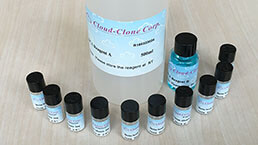 BCA Protein Quantification Kit
-
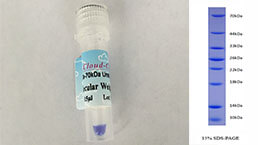 Molecular Mass Marker for Protein
-
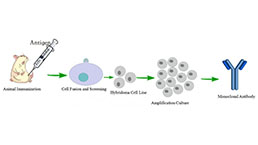 Monoclonal Antibody Customized Service
-
 Polyclonal Antibody Customized Service
-
 Protein Activity Test Experiment Service
-
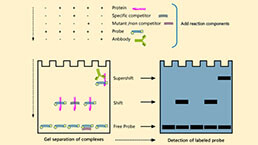 Electrophoretic Mobility Shift Assay (EMSA) Experiment Service
-
 Buffer
-
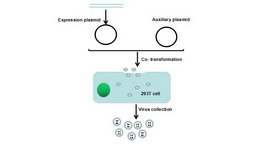 Lentivirus Packaging Experiment Service
-
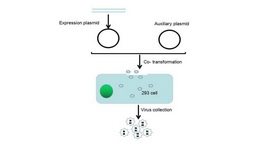 Adenovirus Packaging Experiment Service
-
 Real Time PCR Experimental Service
-
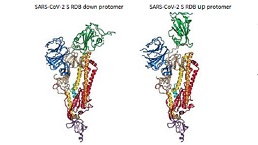 Spike RBD Protein (S-RBD)
-
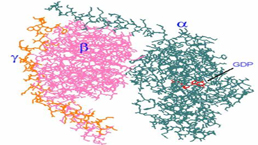 Protein G
-
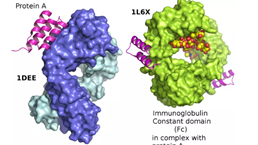 Protein A
Citations
- Osteopenic bone cell response to strontium-substituted hydroxyapatiteSpringerLink: n8233337w171v451
- Dextromethorphan inhibits osteoclast differentiation by suppressing RANKL-induced nuclear factor-κB activationPubMed: 23400250
- Chronic exposure to low concentrations of strontium 90 affects bone physiology but not the hematopoietic system in miceWiley: Source
- The antidepressant bupropion exerts alleviating properties in an ovariectomized osteoporotic rat modelPubmed:25544359
- Enhanced differentiation of osteoblastic cells on novel chitosan/β-1, 3-glucan/bioceramic scaffolds for bone tissue regenerationPubmed:25586067
- Effect of Mirtazapine on Rat Bone Tissue after OrchidectomyPubMed: 25871861
- New method for the fabrication of highly osteoconductive β-1,3-glucan/HA scaffold for bone tissue engineering: Structural, mechanical, and biological characterization.Pubmed:27239050
- MiR-142-5p promotes bone repair by maintaining osteoblast activityPubmed:27085967
- New method for the fabrication of highly osteoconductive β‐1, 3‐glucan/HA scaffold for bone tissue engineering: Structural, mechanical, and biological …doi:10.1002
- MiR‑142‑5p promotes bone repair by maintaining osteoblast activitypubmed:27085967
- Hydrolysis of Extracellular Pyrophosphate increases in post-hemodialysis plasmaPubmed:30038263
- Suppression Effect of Astaxanthin on Osteoclast Formation In Vitro and Bone Loss In VivoPubmed:29562730
- Effects of Amlodipine on Bone Metabolism in Orchidectomised Spontaneously Hypertensive RatsPubmed:29898457
- Combination therapy with BMP‑2 and psoralen enhances fracture healing in ovariectomized mice10.3892:etm.2018.6353
- Long non-coding RNA SNHG7 promotes the fracture repair through negative modulation of miR-9
- The effect of low temperature atmospheric nitrogen plasma on MC3T3-E1 preosteoblast proliferation and differentiation in vitro
- Bovine Hydroxyapatite-Based Bone Scaffold with Gentamicin Accelerates Vascularization and Remodeling of Bone Defect34104195