


Active Filaggrin (FLG) 

Profilaggrin
- UOM
- FOB US$ 340.00 US$ 850.00 US$ 1,700.00 US$ 5,100.00 US$ 12,750.00
- Quantity
Overview
Properties
- Product No.APJ103Hu61
- Organism SpeciesHomo sapiens (Human) Same name, Different species.
- ApplicationsCell culture; Activity Assays.
Research use only - Downloadn/a
- CategoryMetabolic pathway
- Buffer FormulationPBS, pH7.4, containing 0.01% SKL, 1mM DTT, 5% Trehalose and Proclin300.
- Traits Freeze-dried powder, Purity > 80%
- Isoelectric Point11.1
Sign into your account
Share a new citation as an author
Upload your experimental result
Review

Contact us
Please fill in the blank.
-
 Packages (Simulation)
-
 Packages (Simulation)
-
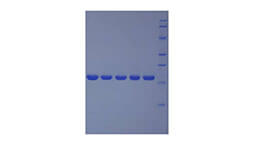
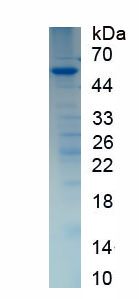 SDS-PAGE
-
 ISO9001: 2008, ISO13485: 2003 Registered
Activity test
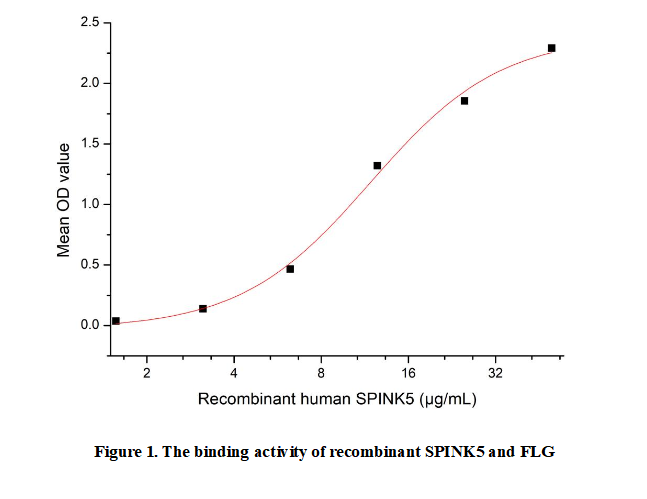
Filaggrin (FLG), a key keratinocyte differentiation protein encoded by the FLG gene, is critical for skin barrier formation. Synthesized as a large precursor, profilaggrin, it is cleaved into functional filaggrin monomers in the stratum granulosum of the epidermis. These monomers bind to keratin filaments, promoting their aggregation to form a dense, protective cytoskeletal structure. Filaggrin also contributes to skin hydration by breaking down into natural moisturizing factors. FLG interacts with SPINK5, which encodes the serine protease inhibitor LEKTI; SPINK5 regulates proteases that process profilaggrin into filaggrin, maintaining proper barrier function.Briefly, SPINK5 was diluted serially in PBS with 0.01% BSA (pH 7.4). Duplicate samples of 100 μl were then transferred to FLG-coated microtiter wells and incubated for 1h at 37℃. Wells were washed with PBST and incubated for 1h with anti-SPINK5 pAb, then aspirated and washed 3 times. After incubation with HRP labelled secondary antibody for 1h at 37℃, wells were aspirated and washed 5 times. With the addition of substrate solution, wells were incubated 15-25 minutes at 37℃. Finally, add 50 µL stop solution to the wells and read at 450/630nm immediately.Measured by its binding ability in a functional ELISA. When Recombinant FLG is lmmobilized at 2 µg/mL(100 uLwell), the concentration of SPINK5 that produces 50% optimal bindingresponse is found to be approximately11.830 µg/mL.
Usage
Reconstitute in 10mM PBS (pH7.4) to a concentration of 0.1-1.0 mg/mL. Do not vortex.
Storage
Avoid repeated freeze/thaw cycles. Store at 2-8°C for one month. Aliquot and store at -80°C for 12 months.
Stability
The thermal stability is described by the loss rate. The loss rate was determined by accelerated thermal degradation test, that is, incubate the protein at 37°C for 48h, and no obvious degradation and precipitation were observed. The loss rate is less than 5% within the expiration date under appropriate storage condition.
Increment services
-
 BCA Protein Quantification Kit
-
 Molecular Mass Marker for Protein
-
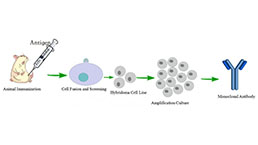 Monoclonal Antibody Customized Service
-
 Polyclonal Antibody Customized Service
-
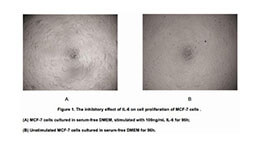 Protein Activity Test Experiment Service
-
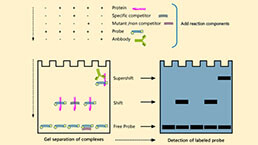 Electrophoretic Mobility Shift Assay (EMSA) Experiment Service
-
 Buffer
-
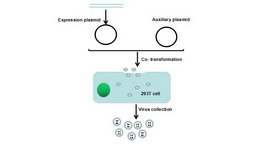 Lentivirus Packaging Experiment Service
-
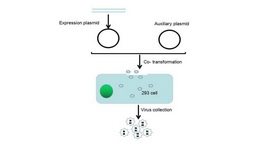 Adenovirus Packaging Experiment Service
-
 Real Time PCR Experimental Service
-
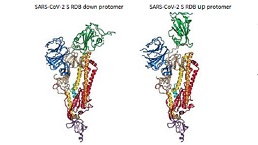 Spike RBD Protein (S-RBD)
-
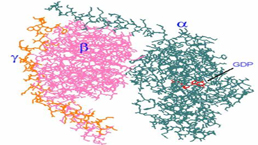 Protein G
-
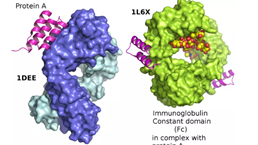 Protein A
Citations
- Filaggrin R501x and 2282del4 gene mutations and its tissue levels in patients with chronic plaque psoriasisLWW: 01000
- Neuromodulatory and Anti-Inflammatory Ingredient for Sensitive Skin: In Vitro Assessment Pubmed:24931812
- Protective Effects of Triphala on Dermal Fibroblasts and Human KeratinocytesPubmed:26731545
- In vitro anti-inflammatory and skin protective properties of extract comprising ceramides from de-oiled rice brandoi:10.1111
- Imiquimod-induced psoriasis-like inflammation in differentiated Human keratinocytes: Its evaluation using curcumin.pubmed:28736282
- A novel, topical, nonsteroidal, TRPV1 antagonist, PAC-14028 cream improves skin barrier function and exerts anti-inflammatory action through modulating epidermal …Pubmed:29752146
- In vitro anti-inflammatory and skin protective properties of Virgin coconut oil10.1016:j.jtcme.2017.06.012
- Markers of atopic dermatitis, allergic rhinitis and bronchial asthma in pediatric patients: correlation with filaggrin, eosinophil major basic protein and …
- Filaggrin, major basic protein and leukotriene B4: Biomarkers for adult patients of bronchial asthma, atopic dermatitis and allergic rhinitisPubmed: 30560019
- Epidermal and Dermal Hallmarks of Photoaging are Prevented by Treatment with Night Serum Containing Melatonin, Bakuchiol, and Ascorbyl …
- 糖化に起因する表皮機能低下に対するワイルドタイムエキスの防御効果
- Filaggrin‐gene mutation has minimal effect on the disease severity in the lesions of atopic dermatitis34322929