


Active Immunoglobulin E (IgE) 

IGHE; Immunoglobulin Heavy Constant Epsilon; Ig epsilon chain C region
- UOM
- FOB US$ 288.00 US$ 720.00 US$ 1,440.00 US$ 4,320.00 US$ 10,800.00
- Quantity
Overview
Properties
- Product No.APA545Hu61
- Organism SpeciesHomo sapiens (Human) Same name, Different species.
- ApplicationsCell culture; Activity Assays.
Research use only - Downloadn/a
- CategoryInfection immunityImmune moleculeHematologyAutoimmunity
- Buffer FormulationPBS, pH7.4, containing 5% Trehalose.
- Traits Freeze-dried powder, Purity > 90%
- Isoelectric Point10.1
Sign into your account
Share a new citation as an author
Upload your experimental result
Review

Contact us
Please fill in the blank.
-
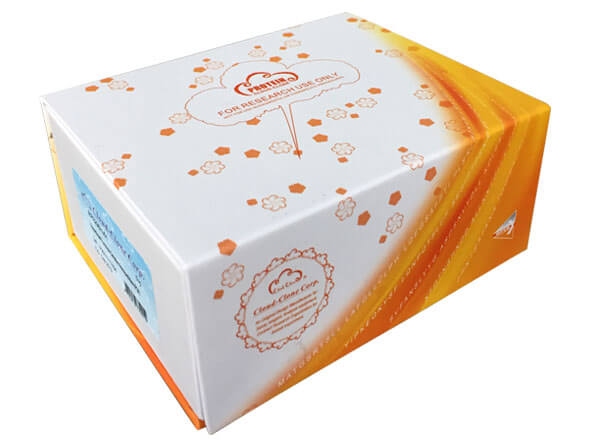 Packages (Simulation)
-
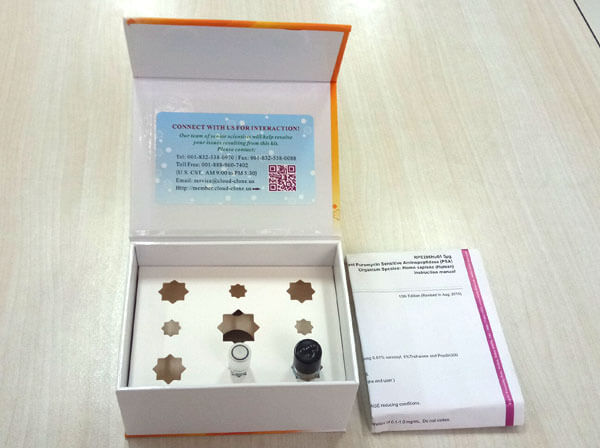 Packages (Simulation)
-
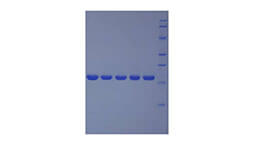
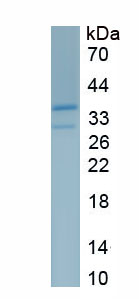 SDS-PAGE
-
 ISO9001: 2008, ISO13485: 2003 Registered
Activity test
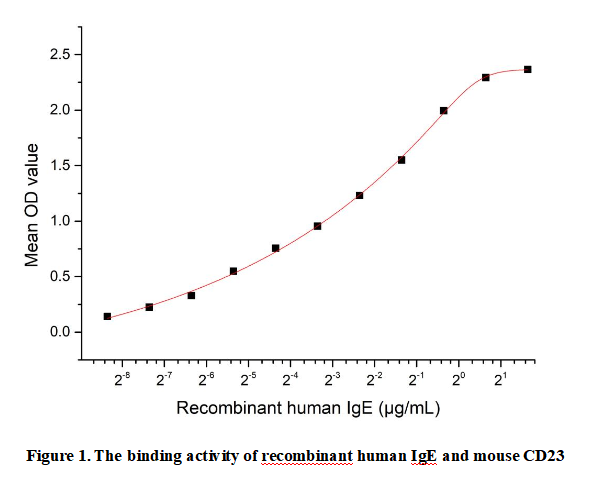
Immunoglobulin E (IgE) is a key class of antibody central to type I hypersensitivity and antiparasitic immunity. Produced mainly by plasma cells in mucosal tissues, IgE is present at very low concentrations in serum compared to other immunoglobulins. It binds with high affinity to FcεRI on mast cells and basophils, sensitizing these cells for allergic reactions upon allergen exposure. Elevated IgE levels are closely linked to allergic diseases such as asthma, rhinitis, and atopic dermatitis. Beyond allergy, IgE contributes to immune surveillance against parasites and modulates immune cell functions. IgE binds CD23 (FcεRII) via its Cε3–Cε4 domains in a low‑affinity, calcium‑dependent interaction.Thus a functional ELISA assay was conducted to detect the interaction of recombinant human IgE and mouse recombinant CD23. Briefly, IgE was diluted serially in PBS with 0.01% BSA (pH 7.4). Duplicate samples of 100 μl were then transferred to CD23-coated microtiter wells and incubated for 1h at 37℃. Wells were washed with PBST and incubated for 1h with anti-IgE pAb, then aspirated and washed 3 times. After incubation with HRP labelled secondary antibody for 1h at 37℃, wells were aspirated and washed 5 times. With the addition of substrate solution, wells were incubated 15-25 minutes at 37℃. Finally, add 50 µL stop solution to the wells and read at 450/630nm immediately. The binding activity of recombinant human IgE and recombinant mouse CD23 was shown in Figure 1, the EC50 for this effect is 0.1039µg/mL.
Usage
Reconstitute in 10mM PBS (pH7.4) to a concentration of 0.1-1.0 mg/mL. Do not vortex.
Storage
Avoid repeated freeze/thaw cycles. Store at 2-8°C for one month. Aliquot and store at -80°C for 12 months.
Stability
The thermal stability is described by the loss rate. The loss rate was determined by accelerated thermal degradation test, that is, incubate the protein at 37°C for 48h, and no obvious degradation and precipitation were observed. The loss rate is less than 5% within the expiration date under appropriate storage condition.
Increment services
-
 BCA Protein Quantification Kit
-
 Molecular Mass Marker for Protein
-
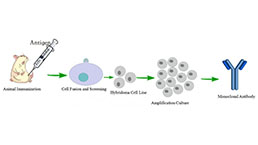 Monoclonal Antibody Customized Service
-
 Polyclonal Antibody Customized Service
-
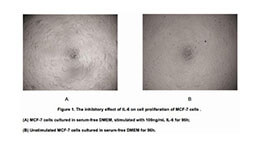 Protein Activity Test Experiment Service
-
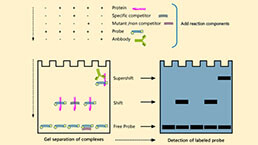 Electrophoretic Mobility Shift Assay (EMSA) Experiment Service
-
 Buffer
-
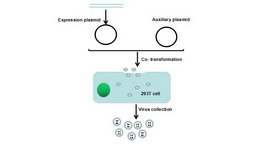 Lentivirus Packaging Experiment Service
-
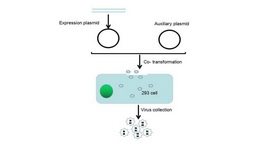 Adenovirus Packaging Experiment Service
-
 Real Time PCR Experimental Service
-
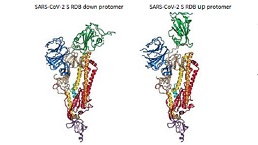 Spike RBD Protein (S-RBD)
-
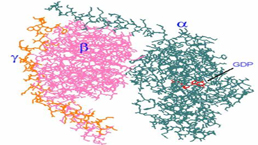 Protein G
-
 Protein A
Citations
- IL17A gene polymorphisms, serum IL-17A and IgE levels, and hepatocellular carcinoma risk in patients with chronic hepatitis B virus infectionPubMed: 23280722
- IL21 and IL21R polymorphisms and their interactive effects on serum IL-21 and IgE levels in patients with chronic hepatitis B virus infectionPubMed: 23354321
- Passive transfer of tumour-derived MDSCs inhibits asthma-related airway inflammationPubmed: 24313384
- Topical Lyogel Containing Corticosteroid Decreases IgE Expression and Enhances the Therapeutic Efficacy Against Atopic EczemaPubMed: 25511806
- Reduced airway microbiota diversity is associated with elevated allergic respiratory inflammationPubMed: 26123423
- The protective role of vitamin D3 in a murine model of asthma via the suppression of TGF-β/Smad signaling and activation of the Nrf2/HO-1 pathway.pubmed:27484042
- Oral administration of Clostridium butyricum CGMCC0313‐1 reduces ovalbumin‐induced allergic airway inflammation in micepubmed:28250847
- Catalpol alleviates ovalbumin-induced asthma in mice: Reduced eosinophil infiltration in the lungpubmed:27992791
- Oral administration of Clostridium butyricum CGMCC0313-1 reduces ovalbumin-induced allergic airway inflammation in micepubmed:28122397
- Protective effects of astragaloside IV against ovalbumin-induced allergic rhinitis are mediated by T-box protein expressed in T cells/GATA-3 and forkhead box protein 3/retinoic acid-related orphan nuclear receptor γt.pubmed:28586019
- Commensal bacteria aggravate allergic asthma via NLRP3/IL-1β signaling in post-weaning mice10.1016:j.jaut.2018.07.003
- Sub-chronic inhalation of reclaimed water-induced fibrotic lesion in a mouse modelPubmed:29655095
- Investigation of hypersensitivity potential of diacetyl by determining cytokine profilesPubmed:29233007
- Changes in Th1/Th2-producing cytokines during acute exacerbation chronic obstructive pulmonary diseasePubmed:29950127
- Effects of catalpol on bronchial asthma and its relationship with cytokinesPubmed: 30536454
- Adipose Tissue-Derived Mesenchymal Stem Cell Modulates the Immune Response of Allergic Rhinitis in a Rat ModelPubmed: 30781605
- Metabolomics analysis of baicalin on ovalbumin-sensitized allergic rhinitis rats
- Antiallergical Effect of New Combined Nazal Aerodisperse System in the Conditions of Experimental Allergic Rhinitis
- Inhibitory effects of catalpol coordinated with budesonide and their relationship with cytokines and Interleukin-13 expressionPubmed: 31737193
- Animal models for analysis of hypersensitivity reactions to Shuanghuanglian injectionPubmed: 32302806
- Protective effect of Asarum sieboldii essential oil on ovalbumin induced allergic rhinitis in ratPubmed: 32395767
- Synergistic Phage-surfactant Combination Clears IgE-promoted Staphylococcus aureus Aggregation in Vitro and Enhances the Effect in VivoPubmed: 32335278
- Aggravation of Airway Inflammation in RSV-Infected Asthmatic Mice Following Infection-Induced Alteration of Gut Microbiota
- Tissue-Engineered Decellularized Allografts for Anterior Cruciate Ligament Reconstruction
- Biomarkers of Allergic Asthma and their Association with Serum Parameters
- Qingfei oral liquid inhibited autophagy to alleviate inflammation via mTOR signaling pathway in RSV-infected asthmatic mice33706133
- Trace endotoxin in reclaimed water is only one of the risk sources in subchronic inhalation exposure34090073
- Effectiveness of biomarkers and serum parameters in determination allergic asthma and detection of its severity
- Roles Played by the PI3K/Akt/HIF-1α Pathway and IL-17A in the Chinese Subtype of Chronic Sinusitis with Nasal PolypsPubmed:35075349
- Dapagliflozin mitigates ovalbumin-prompted airway inflammatory-oxidative successions and associated bronchospasm in a rat model of allergic asthmaPubmed:35549595