


Active Interleukin 1 Alpha (IL1a) 

IL1-A; IL-1α; IL1F1; Preinterleukin 1 Alpha; Hematopoietin-1; Pro-Interleukin-1-Alpha; Interleukin-1 Family Member 1
- UOM
- FOB US$ 306.00 US$ 764.00 US$ 1,528.00 US$ 4,584.00 US$ 11,460.00
- Quantity
Overview
Properties
- Product No.APA071Hu61
- Organism SpeciesHomo sapiens (Human) Same name, Different species.
- ApplicationsCell culture; Activity Assays.
Research use only - DownloadInstruction Manual
- CategoryCytokineApoptosis
- Buffer FormulationPBS, pH7.4, containing 5% Trehalose.
- Traits Freeze-dried powder, Purity > 95%
- Isoelectric Point5.2
Sign into your account
Share a new citation as an author
Upload your experimental result
Review

Contact us
Please fill in the blank.
-
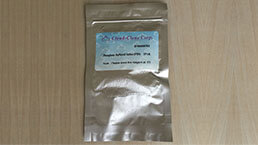
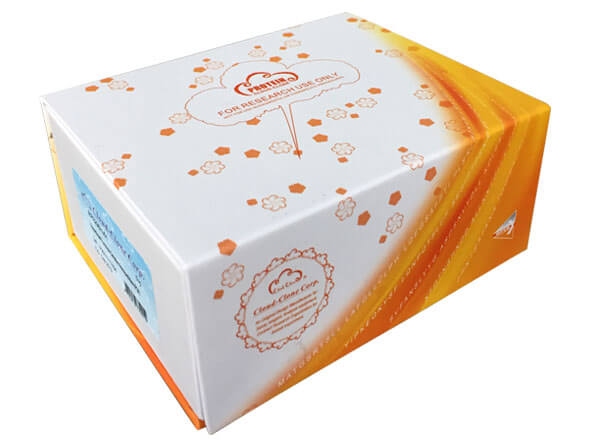 Packages (Simulation)
-
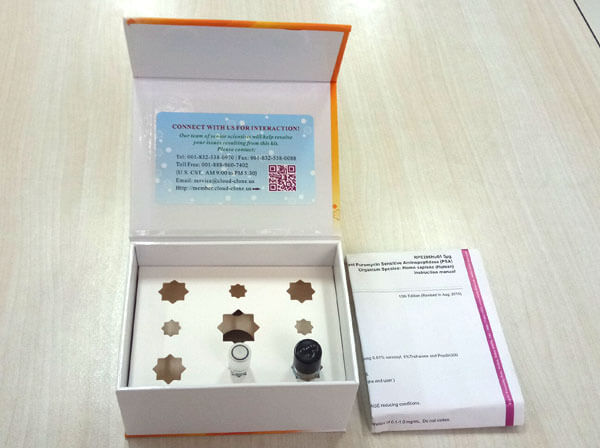 Packages (Simulation)
-
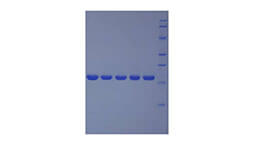
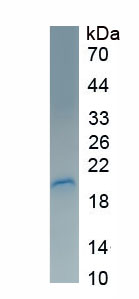 Figure. SDS-PAGE
-
 ISO9001: 2008, ISO13485: 2003 Registered
Activity test
Interleukin 1 Alpha (IL1a) is a pivotal pro-inflammatory cytokine belonging to the interleukin-1 (IL-1) family, first identified for its role in mediating immune and inflammatory responses. It is synthesized as a precursor (pro-IL1a) primarily in immune cells like macrophages, monocytes, and dendritic cells, as well as non-immune cells such as epithelial and endothelial cells. Unlike its homolog IL1β, pro-IL1a retains biological activity without needing cleavage by caspase-1, though it can also be processed into a mature form. IL1a acts locally at sites of tissue damage or infection to trigger inflammation, recruit immune cells, and regulate cell proliferation and survival. Critically, IL1a exerts its effects by directly binding to Interleukin 1 Receptor Type I (IL1R1) on target cell surfaces.
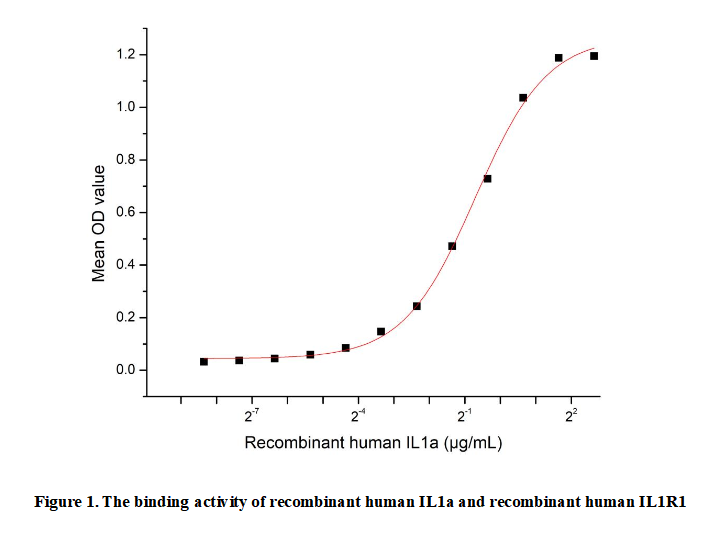
To detect the activity of recombinant IL1a, a functional ELISA assay was performed to evaluate the interaction between recombinant human IL1a and recombinant human IL1R1.Briefly, biotin-linked IL1a were diluted serially in PBS, with 0.01% BSA (pH 7.4). Duplicate samples of 100µl were then transferred to IL1R1-coated microtiter wells and incubated for 1h at 37℃. Wells were washed with PBST 3 times and incubation with Streptavidin-HRP for 30min, then wells were aspirated and washed 5 times. With the addition of substrate solution, wells were incubated 15-25 minutes at 37℃. Finally, add 50µl stop solution to the wells and read at 450nm immediately. The binding activity of IL1a and IL1R1 was shown in Figure 1, the EC50 for this effect is 0.15147µg/mL.
Usage
Reconstitute in 10mM PBS (pH7.4) to a concentration of 0.1-1.0 mg/mL. Do not vortex.
Storage
Avoid repeated freeze/thaw cycles. Store at 2-8°C for one month. Aliquot and store at -80°C for 12 months.
Stability
The thermal stability is described by the loss rate. The loss rate was determined by accelerated thermal degradation test, that is, incubate the protein at 37°C for 48h, and no obvious degradation and precipitation were observed. The loss rate is less than 5% within the expiration date under appropriate storage condition.
Increment services
-
 BCA Protein Quantification Kit
-
 Molecular Mass Marker for Protein
-
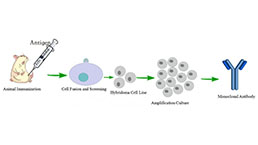 Monoclonal Antibody Customized Service
-
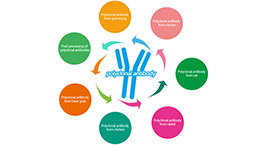 Polyclonal Antibody Customized Service
-
 Protein Activity Test Experiment Service
-
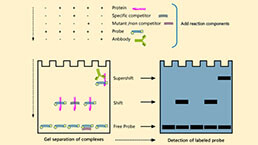 Electrophoretic Mobility Shift Assay (EMSA) Experiment Service
-
 Buffer
-
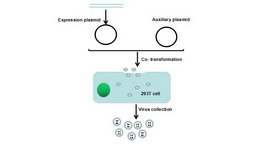 Lentivirus Packaging Experiment Service
-
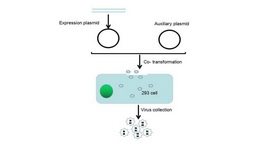 Adenovirus Packaging Experiment Service
-
 Real Time PCR Experimental Service
-
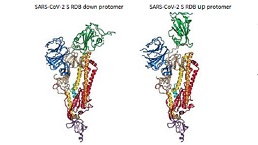 Spike RBD Protein (S-RBD)
-
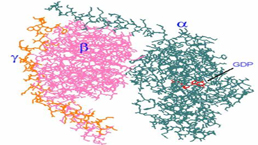 Protein G
-
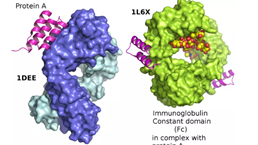 Protein A
Citations
- Quantitative assessment of hsp70, IL-1β and TNF-α in the spinal cord of dogs with E40K SOD1-associated degenerative myelopathyPubmed: 24662024
- Expression of S100 family proteins in neonatal rats with sepsis and its significancePubMed: 25973048
- Hypoxia-induced secretion of IL-17 from adipose-derived mesenchymal stem cell promotes growth and cancer stem cell properties of Burkitt lymphomaPubMed: 26695151
- Vaccination of rabbits with immunodominant antigens from Sarcoptes scabiei induced highlevels of humoral responses and pro-inflammatory cytokines but confers limited protection.pubmed:27502394
- Salusin-β contributes to oxidative stress and inflammation in diabetic cardiomyopathypubmed:28333148
- Ultraviolet A photosensitivity profile of dexchlorpheniramine maleate and promethazine-based creams: Anti-inflammatory,antihistaminic, and skin barrier protection propertiesDOI: 10.1111/jocd.12349
- Optimization of Storage Temperature for Retention of Undifferentiated Cell Character of Cultured Human Epidermal Cell Sheetspubmed:28811665
- Increased synovial lipodystrophy induced by high fat diet aggravates synovitis in experimental osteoarthritis.pubmed:29191221
- Screening of circular RNAs and validation of circANKRD36 associated with inflammation in patients with type 2 diabetes mellitusPubmed:30066828
- Neuroprotective effect of curcumin against cerebral ischemia-reperfusion via mediating autophagy and inflammationPubmed:29243061
- Amniotic fluid HIF1α and exosomal HIF1α in cervical insufficiency patients with physical examination-indicated cerclagePubmed:29357727
- Radiographic and Immunohistochemical Evaluation of Root Canal Treatment Using Different Irrigation SystemsPubmed: 30970054
- The role of amniotic fluid exosome, hypoxia inducible fator-1α, and inflammatory cytokine in cervical insufficiency
- Seluang Fish (Rasbora Spp.) Oil Decreases Inflammatory Cytokines Via Increasing Vitamin D Level in Systemic Lupus Erythematosus
- Effect of postpartum administration of ketoprofen on proinflammatory cytokine concentration and their correlation with lipogenesis and ketogenesis in Holstein …Pubmed: 31560476
- The toxicity of alumina nanoparticles to immune system in micePubmed: 32162999
- Biomechanically, structurally and functionally meticulously tailored polycaprolactone/silk fibroin scaffold for meniscus regenerationPubmed: 32308770
- IL-1α regulates osteogenesis and osteoclastic activity of dental follicle cells via JNK and p38 MAPK pathwaysPubmed: 33107399
- ANXA1 directs Schwann cells proliferation and migration to accelerate nerve regeneration through the FPR2/AMPK pathwayPubmed: 32908567
- Association Between Serum Selenium Level and Subclinical Mastitis in Dairy CattlePubmed: 32583225
- Photodynamic therapy induces human esophageal carcinoma cell pyroptosis by targeting the PKM2/caspase-8/caspase-3/GSDME axis34256094
- Baicalin suppresses neuron autophagy and apoptosis by regulating astrocyte polarization in pentylenetetrazol-induced epileptic rats and PC12 cells34780748
- Inflammatory markers in uterine lavage fluids of pregnant, non-pregnant, and intrauterine device implanted mares on Days 10 and 15 post ovulation34944269
- Inflammatory Markers in Uterine Lavage Fluids of Pregnant, Non-Pregnant, and Intrauterine Device Implanted Mares on Days 10 and 15 Post Ovulation …Pubmed:34944269