


Active Kininogen 1 (KNG1) 

BDK; KNG; HMWK; Alpha-2-Thiol Proteinase Inhibitor; Bradykinin; Kallidin; Fitzgerald factor; High molecular weight kininogen; Williams-Fitzgerald-Flaujeac factor; Ile-Ser-Bradykinin
- UOM
- FOB US$ 232.00 US$ 580.00 US$ 1,160.00 US$ 3,480.00 US$ 8,700.00
- Quantity
Overview
Properties
- Product No.APB267Mu01
- Organism SpeciesMus musculus (Mouse) Same name, Different species.
- ApplicationsCell culture; Activity Assays.
Research use only - DownloadInstruction Manual
- CategoryHematology
- Buffer FormulationPBS, pH7.4, containing 5% Trehalose.
- Traits Freeze-dried powder, Purity > 90%
- Isoelectric Point5.6
Sign into your account
Share a new citation as an author
Upload your experimental result
Review

Contact us
Please fill in the blank.
-
 Packages (Simulation)
-
 Packages (Simulation)
-
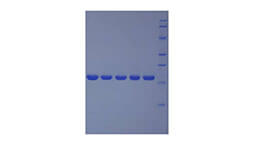
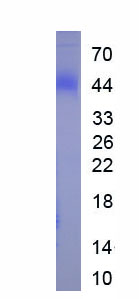 Figure. SDS-PAGE
-
 ISO9001: 2008, ISO13485: 2003 Registered
Activity test
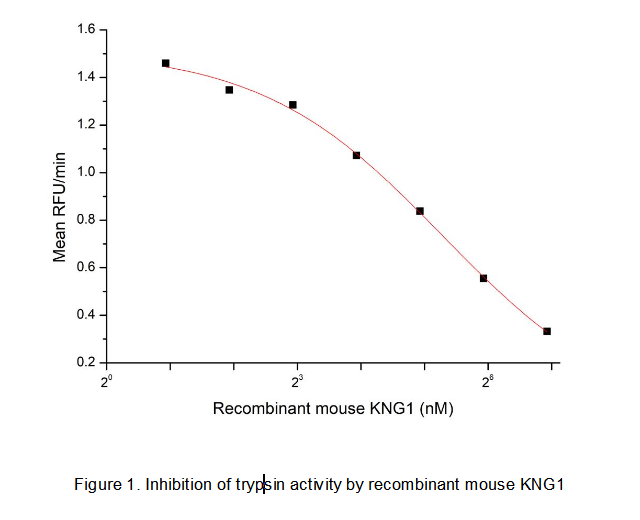
Kininogen 1 (KNG1), specifically its high-molecular-weight form (HMWK), is a multifunctional plasma glycoprotein that plays a critical role in the contact activation system of intrinsic blood coagulation. It acts as a non-enzymatic cofactor, circulating in a complex with prekallikrein and factor XI. Upon binding to negatively charged surfaces, HMWK facilitates the activation of these factors, leading to the initiation of coagulation and the inflammatory kallikrein-kinin system.The activity of Kininogen 1 (KNG1) was measured by its ability to inhibit papain cleavage of the fluorogenic peptide substrate Z-Phe-Arg-AMC in assay buffer (50 mM Tris, pH 7.0). Papain was diluted to 100 μg/mL in activation buffer (50 mM Tris, 5 mM DTT, pH 7.0) and allowed to stand at room temperature for 10 minutes, then further diluted to 2 μg/mL with assay buffer. KNG1 was serially diluted 2-fold with assay buffer. Subsequently, 50 μL of diluted papain (2 μg/mL) was incubated with 50 μL of KNG1 at room temperature for 10 minutes. The incubated mixture was diluted 1:5 with assay buffer, and 50 μL of this diluted mixture was mixed with 50 μL of Z-Phe-Arg-AMC substrate (200 μM, prepared by dissolving in DMSO to 10 mM and then diluting with assay buffer). A substrate blank containing 50 μL of assay buffer and 50 μL of substrate was also included. Reading was performed in kinetic mode at excitation and emission wavelengths of 380 nm and 460 nm, respectively, for 5 minutes. The results showed that KNG1 significantly inhibited papain activity.The result was shown in Figure 1 and it was obvious that recombinant mouse KNG1 significantly decreased trypsin activity. The inhibition IC50 was <39 nM.
Usage
Reconstitute in 10mM PBS (pH7.4) to a concentration of 0.1-1.0 mg/mL. Do not vortex.
Storage
Avoid repeated freeze/thaw cycles. Store at 2-8°C for one month. Aliquot and store at -80°C for 12 months.
Stability
The thermal stability is described by the loss rate. The loss rate was determined by accelerated thermal degradation test, that is, incubate the protein at 37°C for 48h, and no obvious degradation and precipitation were observed. The loss rate is less than 5% within the expiration date under appropriate storage condition.
Increment services
-
 BCA Protein Quantification Kit
-
 Molecular Mass Marker for Protein
-
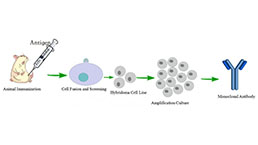 Monoclonal Antibody Customized Service
-
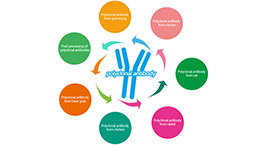 Polyclonal Antibody Customized Service
-
 Protein Activity Test Experiment Service
-
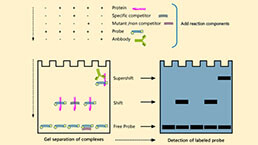 Electrophoretic Mobility Shift Assay (EMSA) Experiment Service
-
 Buffer
-
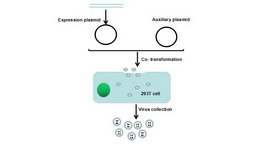 Lentivirus Packaging Experiment Service
-
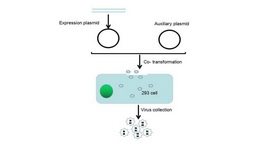 Adenovirus Packaging Experiment Service
-
 Real Time PCR Experimental Service
-
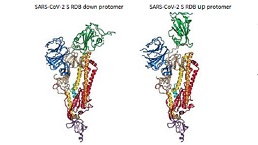 Spike RBD Protein (S-RBD)
-
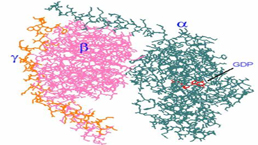 Protein G
-
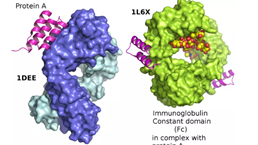 Protein A
Citations
- Higher Serum Angiotensinogen Is an Indicator of IgA Vasculitis with Nephritis Revealed by Comparative Proteomes AnalysisPubMed: 26098644
- Einfluss zyklischer mechanischer Dehnung auf das Kinin-Kallikrein-System in alveolären Typ-II-Zellen der Ratte21931
- Evaluation of the anti-hypertensive effect of Tengfu Jiangya tablet by combination of UPLC-Q-exactive-MS-based metabolomics and iTRAQ-based proteomics …Pubmed:29453042
- Contact System Activation and Neutrophil Extracellular Trap Markers: Risk Factors for Portal Vein Thrombosis in Patients With Hepatocellular CarcinomaDoi: 10.1177/1076029618825310
- Activation of Factor XII and Kallikrein-kinin System Combined with Neutrophil Extracellular Trap Formation in Diabetic RetinopathyPubmed: 31426112
- Einfluss mechanischer Dehnung von alveolaren Typ-II-Zellen auf die Bildung von Bradykinin durch das Kallikrein-Kinin-System
- Maternal Serum Proteomic Profiles of Pregnant Women With Type 1 Diabetes34940989