


Active Osteopontin (OPN) 

SPP1; BNSP; BSPI; ETA1; Secreted Phosphoprotein 1; Bone Sialoprotein I; Early T-Lymphocyte Activation 1; Nephropontin; Urinary stone protein; Uropontin
- UOM
- FOB US$ 288.00 US$ 720.00 US$ 1,440.00 US$ 4,320.00 US$ 10,800.00
- Quantity
Overview
Properties
- Product No.APA899Bo61
- Organism SpeciesBos taurus; Bovine (Cattle) Same name, Different species.
- ApplicationsCell culture; Activity Assays.
Research use only - DownloadInstruction Manual
- CategoryTumor immunityBone metabolism
- Buffer FormulationPBS, pH7.4, containing 5% Trehalose.
- Traits Freeze-dried powder, Purity > 80%
- Isoelectric Point4.2
Sign into your account
Share a new citation as an author
Upload your experimental result
Review

Contact us
Please fill in the blank.
-
 Packages (Simulation)
-
 Packages (Simulation)
-
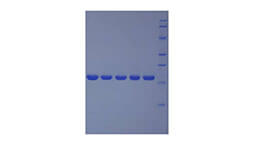
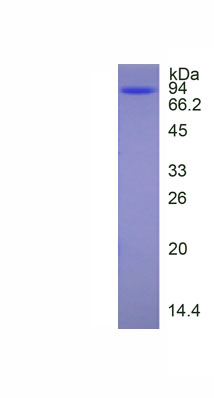 Figure. SDS-PAGE
-
 ISO9001: 2008, ISO13485: 2003 Registered
Activity test
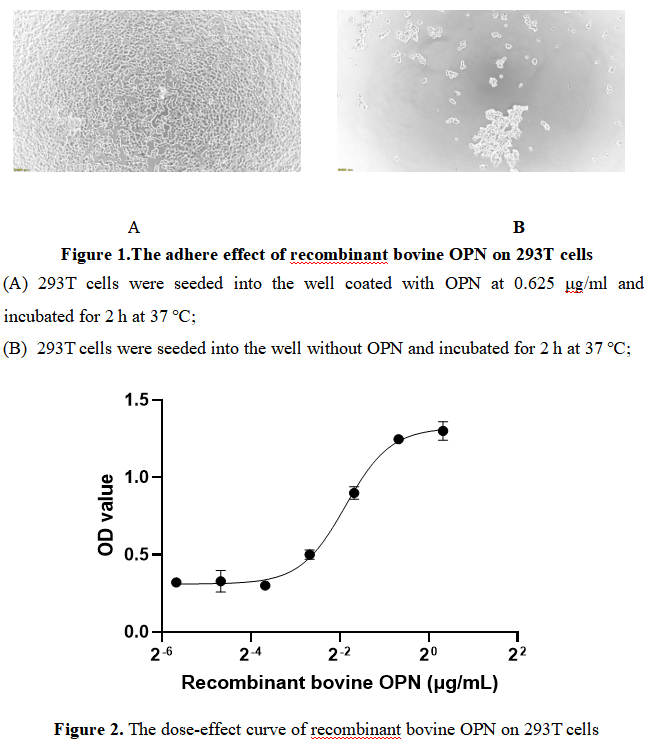
Osteopontin (OPN), also known as secreted phosphoprotein 1 (SPP1), is a highly conserved, multifunctional glycoprotein that plays pivotal roles in various physiological and pathological processes. Encoded by the SPP1 gene, this protein is characterized by its arginine-glycine-aspartic acid (RGD) motif, which enables it to interact with integrin receptors, facilitating cell adhesion, migration, and signaling. As OPN has the function of cell adhesion, we measure the activity of recombinant bovine OPN by the ability of the immobilized protein to support the adhesion of 293T cells. When cells are added to different concentrations of recombinant bovine OPN coated plates, cells will adhere after 2 hour incubation at 37 ℃. The adhesion of 293T after 2 hour incubation at 37 ℃ observed by inverted microscope was shown in Figure 1. Cells adherent was in a dose dependent manner, the result was shown in Figure 2, the EC50 was 0.27 μg/ml.
Usage
Reconstitute in 10mM PBS (pH7.4) to a concentration of 0.1-1.0 mg/mL. Do not vortex.
Storage
Avoid repeated freeze/thaw cycles. Store at 2-8°C for one month. Aliquot and store at -80°C for 12 months.
Stability
The thermal stability is described by the loss rate. The loss rate was determined by accelerated thermal degradation test, that is, incubate the protein at 37°C for 48h, and no obvious degradation and precipitation were observed. The loss rate is less than 5% within the expiration date under appropriate storage condition.
Increment services
-
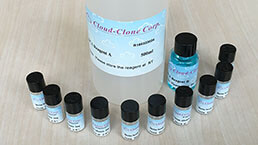 BCA Protein Quantification Kit
-
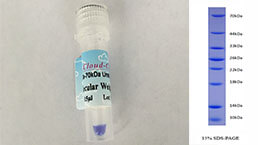 Molecular Mass Marker for Protein
-
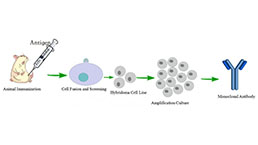 Monoclonal Antibody Customized Service
-
 Polyclonal Antibody Customized Service
-
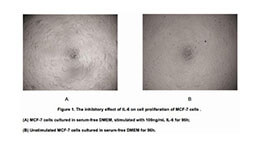 Protein Activity Test Experiment Service
-
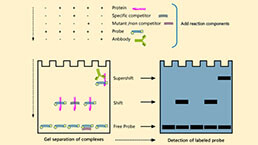 Electrophoretic Mobility Shift Assay (EMSA) Experiment Service
-
 Buffer
-
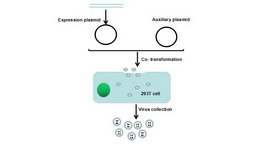 Lentivirus Packaging Experiment Service
-
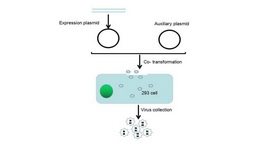 Adenovirus Packaging Experiment Service
-
 Real Time PCR Experimental Service
-
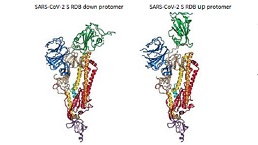 Spike RBD Protein (S-RBD)
-
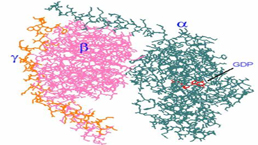 Protein G
-
 Protein A
Citations
- Proliferation and osteogenesis of immortalized bone marrow-derived mesenchymal stem cells in porous polylactic glycolic acid scaffolds under perfusion culturePubMed: 19280635
- Elevated osteopontin level of synovial fluid and articular cartilage is associated with disease severity in knee osteoarthritis patientsPubMed: 19747583
- Thrombin-cleaved osteopontin levels in synovial fluid correlate with disease severity of knee osteoarthritis.Jrheum: source
- Suppression of tumor growth in xenograft model mice by small interfering RNA targeting osteopontin delivery using biocompatible poly(amino ester)ScienceDirect: S0378517312003742
- The use of non-viral gene vectors for bioactive poly-(D, L-lactide) implant surfaces in bone tissue engineeringEcmjournal: Source
- Influence of Seminal Plasma Antioxidants and Osteopontin on Fertility of the Arabian HorseScienceDirect: Source
- Treatment with Carnitine Enhances Bone Fracture Healing under Osteoporotic and/or Inflammatory ConditionsWiley:Source
- Tension Force-Induced ATP Promotes Osteogenesis Through P2X7 Receptor in OsteoblastsPubmed:24905552
- Treatment with α-lipoic acid enhances the bone healing after femoral fracture model of ratsPubmed:25038619
- The interplay among iron metabolism, endothelium and inflammatory cascade in dysmetabolic disordersPubmed:25245337
- Low-intensity pulsed ultrasound-induced ATP increases bone formation via the P2X7 receptor in osteoblast-like MC3T3-E1 cellsPubmed:25542352
- Effects of magnesium degradation products on mesenchymal stem cell fate and osteoblastogenesisPubMed: 26283150
- An Attempt to Evaluate Selected Aspects of “Bone–Fat Axis” Function in Healthy Individuals and Patients With Pancreatic CancerPubMed: 26266370
- Osteogenic Differentiation of Canine Adipose Stem Cells Cultured in Alginate-Fibrin-Based HydrogelContent: Asp
- Osteopontin level correlates negatively with tumor shrinkage in neoadjuvant chemoradiation of locally advanced rectal cancerIndex.Php: Amor
- Defective Initiation of Liver Regeneration in Osteopontin-Deficient Mice after Partial Hepatectomy due to Insufficient Activation of IL-6/Stat3 PathwayPubMed: 26327817
- Perioperative Clinical Investigation of Serum VEGF, CA19-9 and OPN Levels in Patients with Colorectal Carcinoma.Ebscohost
- Serum Osteopontin as a Novel Biomarker for Muscle Regeneration in Duchenne Muscular Dystrophy.Pubmed:26963343
- Stenotic Bicuspid and Tricuspid Aortic Valves - Micro-Computed Tomography and Biological Indices of Calcification.pubmed:28344201
- Effect of Cardiac Resynchronization Therapy on Myocardial Fibrosis and Relevant Cytokines in a Canine Model With Experimental Heart Failure.pubmed:28127817
- Osteopontin stimulates matrix metalloproteinase expression through the nuclear factor-κB signaling pathway in rat temporomandibular joint and condylar chondrocytes.pubmed:28337262
- Targeted Microbiome Intervention by Microencapsulated Delayed-Release Niacin Beneficially Affects Insulin Sensitivity in Humanspubmed:29212824
- Icaritin induces MC3T3-E1 subclone14 cell differentiation through estrogen receptor-mediated ERK1/2 and p38 signaling activation.pubmed:28742995
- Urine-Based Biomarkers for Alzheimer's Disease Identified Through Coupling Computational and Experimental MethodsPubmed:30040720
- Osteopontin, cardiovascular risk factors and carotid intima-Media thickness in chronic kidney diseaseid:233806
- In Situ Self-Assembly of Graphene Oxide/Polydopamine/Sr2+ Nanosheets on Titanium Surfaces for Enhanced Osteogenic Differentiation of Mesenchymal Stem CellsDoi: 10.1016/j.carbon.2018.10.081
- Detection of proteins associated with extracellular matrix regulation in the aqueous humour of patients with primary glaucoma.Pubmed: 30994369
- Identification of urinary candidate biomarkers of cisplatin-induced nephrotoxicity in patients with carcinomaPubmed: 31629959
- Inflammatory response to magnesium-based biodegradable implant materialsPubmed: 31610341
- Calcium Kidney Stones are Associated with Increased Risk of Carotid Atherosclerosis: the Link between Urinary Stone Risks, Carotid Intima-Media Thickness, and …Pubmed: 32182704
- Febuxostat attenuates vascular calcification induced by vitamin D3 plus nicotine in ratsPubmed: 33010420
- Osteoconductive potential of PLGA/bioglass composite biomaterials
- Structural Constraint of Osteopontin Facilitates Efficient Binding to CD4434070790
- Structural Changes and Detection of Liver Fibrosis¨CRelated Protein Levels in Coculture of Alveolar Echinococcosis-Protoscoleces and Human Hepatic Stellate cells
- Structural changes and expression of hepatic fibrosis-related proteins in coculture of Echinococcus multilocularis protoscoleces and human hepatic stellate …34857049
- Plasma Concentrations of New Biochemical Markers of Atherosclerosis in Patients with Dyslipidemia—A Pilot StudyPubmed:35743980