


Active Thrombospondin 1 (THBS1) 

TSP1; Thrombospondin-1p180
- UOM
- FOB US$ 252.00 US$ 630.00 US$ 1,260.00 US$ 3,780.00 US$ 9,450.00
- Quantity
Overview
Properties
- Product No.APA611Mu01
- Organism SpeciesMus musculus (Mouse) Same name, Different species.
- ApplicationsCell culture; Activity Assays.
Research use only - DownloadInstruction Manual
- CategoryInfection immunityHematology
- Buffer FormulationPBS, pH7.4, containing 0.01% SKL, 5% Trehalose.
- Traits Freeze-dried powder, Purity > 90%
- Isoelectric Point5.9
Sign into your account
Share a new citation as an author
Upload your experimental result
Review

Contact us
Please fill in the blank.
-
 Packages (Simulation)
-
 Packages (Simulation)
-
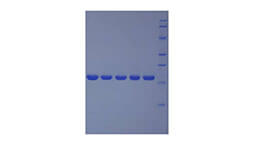
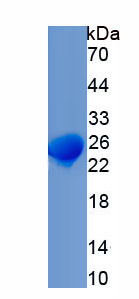 Figure. SDS-PAGE
-
 ISO9001: 2008, ISO13485: 2003 Registered
Activity test
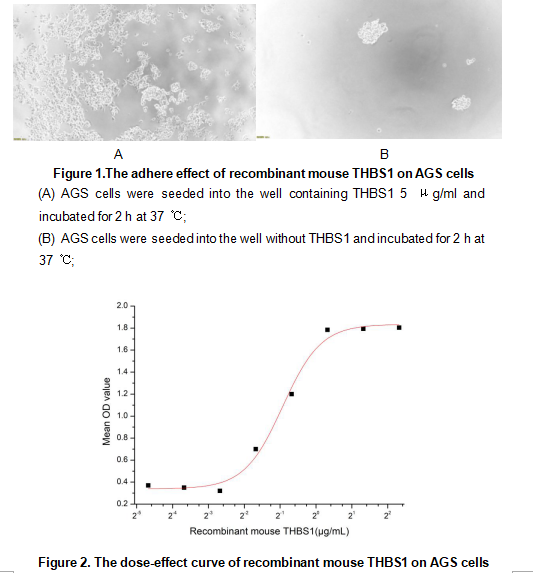
Thrombospondin 1 (THBS1) is a matricellular glycoprotein that critically mediates cell–matrix interactions. It promotes cell adhesion by binding to cell surface receptors, including integrins such as αvβ3 and α4β1, and non-integrin receptors like CD36 and CD47. Through its multiple domains, THBS1 forms a molecular bridge between the extracellular matrix and the cell membrane, facilitating focal adhesion assembly and cytoskeletal organization. This adhesive function is essential for modulating cellular processes such as migration, proliferation, and survival, positioning THBS1 as a key regulator in tissue remodeling, wound healing, and angiogenesis. As THBS1 has the function of cell adhesion, we measure the activity of recombinant mouse THBS1 by the ability of the immobilized protein to support the adhesion of AGS cell. When cells are added to different concentrations of recombinant mouse THBS1 coated plates, cells will adhere after 2 hour incubation at 37 ℃. The adhesion of AGS after 2 hour incubation at 37 ℃ observed by inverted microscope was shown in Figure 1. Cell adherent was in a dose dependent manner, the result was shown in Figure 2, the EC50 was 0.6 μg/ml.
Usage
Reconstitute in 10mM PBS (pH7.4) to a concentration of 0.1-1.0 mg/mL. Do not vortex.
Storage
Avoid repeated freeze/thaw cycles. Store at 2-8°C for one month. Aliquot and store at -80°C for 12 months.
Stability
The thermal stability is described by the loss rate. The loss rate was determined by accelerated thermal degradation test, that is, incubate the protein at 37°C for 48h, and no obvious degradation and precipitation were observed. The loss rate is less than 5% within the expiration date under appropriate storage condition.
Increment services
-
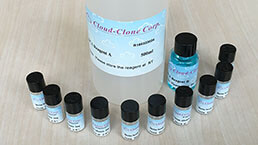 BCA Protein Quantification Kit
-
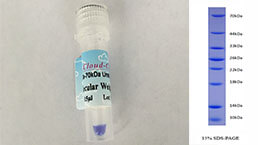 Molecular Mass Marker for Protein
-
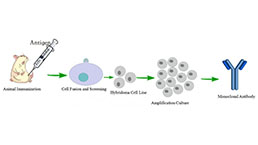 Monoclonal Antibody Customized Service
-
 Polyclonal Antibody Customized Service
-
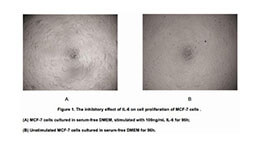 Protein Activity Test Experiment Service
-
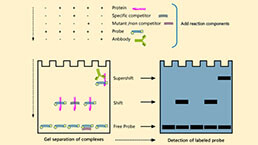 Electrophoretic Mobility Shift Assay (EMSA) Experiment Service
-
 Buffer
-
 Lentivirus Packaging Experiment Service
-
 Adenovirus Packaging Experiment Service
-
 Real Time PCR Experimental Service
-
 Spike RBD Protein (S-RBD)
-
 Protein G
-
 Protein A
Citations
- Glucose and insulin modify thrombospondin 1 expression and secretion in primary adipocytes from diet-induced obese ratsSpringerLink: 1v552w21p7423764
- Secretome of apoptotic peripheral blood cells (APOSEC) attenuates microvascular obstruction in a porcine closed chest reperfused acute myocardial infarction model: role of platelet aggregation and vasodilationPubMed: 22899170
- Anthocyanin-Rich Purple Corn Extract Inhibit Diabetes-Associated Glomerular AngiogenesisPubmed: 24278186
- Identification of plasma protein markers common to patients with malignant tumour and Abnormal Savda in Uighur medicine: a prospective clinical studyPubmed:25652121
- Novel circulating peptide biomarkers for esophageal squamous cell carcinoma revealed by a magnetic bead-based MALDI-TOFMS assaypubmed:26993605
- Orosomucoid 2 serves for predicting but not for monitoring drug response in patients with knee osteoarthritis treated with chondroitin sulfate/glucosamine …10.1016:j.joca.2018.02.412
- Prediction of Spontaneous Preterm Birth in At-risk Women Using Thrombospondin 1 from Cervicovaginal Fluid: A Prospective Observational Study34531612
- Mesenchymal stromal cells mitigate liver damage after extended resection in the pig by modulating thrombospondin-1/TGF-β34862411