


Multiplex Assay Kit for Surfactant Protein B (SP-B) ,etc. by CBA (Cytometric Bead Array) 

SFTPB; PSPB; SFTB3; SFTP3; SPB; Surfactant Associated Protein B; Pulmonary Surfactant Protein B; 18 kDa pulmonary-surfactant protein; 6 kDa protein
Overview
Properties
- Product No.CMB622Hu
- Organism SpeciesHomo sapiens (Human) Same name, Different species.
- ApplicationsFLIA Kit for Antigen Detection.
Research use only - DownloadInstruction Manual
- CategoryTumor immunityInfection immunityPulmonology
Sign into your account
Share a new citation as an author
Upload your experimental result
Review

Contact us
Please fill in the blank.
-
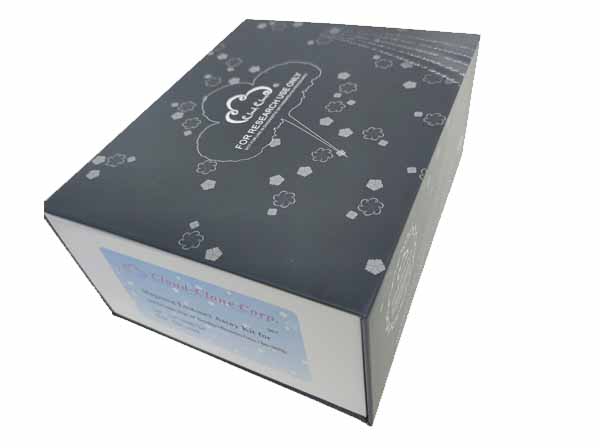 Packages (Simulation)
-
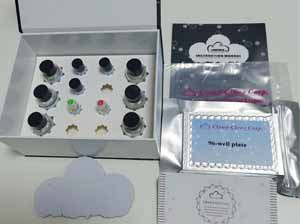 Packages (Simulation)
-
 ISO9001: 2008, ISO13485: 2003 Registered
Recovery
Matrices listed below were spiked with certain level of recombinant Surfactant Protein B (SP-B) ,etc. by CBA (Cytometric Bead Array) and the recovery rates were calculated by comparing the measured value to the expected amount of Surfactant Protein B (SP-B) ,etc. by CBA (Cytometric Bead Array) in samples.
| Matrix | Recovery range (%) | Average(%) |
| serum(n=5) | 91-99 | 94 |
| EDTA plasma(n=5) | 78-102 | 97 |
| heparin plasma(n=5) | 80-99 | 84 |
Precision
Intra-assay Precision (Precision within an assay): 3 samples with low, middle and high level Surfactant Protein B (SP-B) ,etc. by CBA (Cytometric Bead Array) were tested 20 times on one plate, respectively.
Inter-assay Precision (Precision between assays): 3 samples with low, middle and high level Surfactant Protein B (SP-B) ,etc. by CBA (Cytometric Bead Array) were tested on 3 different plates, 8 replicates in each plate.
CV(%) = SD/meanX100
Intra-Assay: CV<10%
Inter-Assay: CV<12%
Linearity
The linearity of the kit was assayed by testing samples spiked with appropriate concentration of Surfactant Protein B (SP-B) ,etc. by CBA (Cytometric Bead Array) and their serial dilutions. The results were demonstrated by the percentage of calculated concentration to the expected.
| Sample | 1:2 | 1:4 | 1:8 | 1:16 |
| serum(n=5) | 89-99% | 98-105% | 91-98% | 97-105% |
| EDTA plasma(n=5) | 88-104% | 81-90% | 93-102% | 94-101% |
| heparin plasma(n=5) | 96-103% | 91-105% | 90-104% | 93-102% |
Stability
The stability of kit is determined by the loss rate of activity. The loss rate of this kit is less than 5% within the expiration date under appropriate storage condition.
To minimize extra influence on the performance, operation procedures and lab conditions, especially room temperature, air humidity, incubator temperature should be strictly controlled. It is also strongly suggested that the whole assay is performed by the same operator from the beginning to the end.
Reagents and materials provided
| Reagents | Quantity | Reagents | Quantity |
Assay procedure summary
1. Add 200μL analysis buffer solution to each well of the plate for pre-wetting;
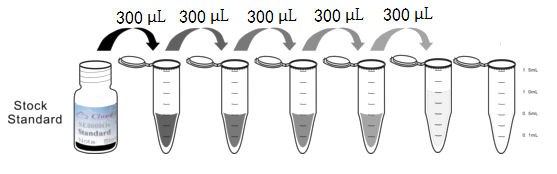
2. Preparation of standards, reagents and samples before the experiment;
3. Add 100μL standard or sample to each well, add 10μL magnetic beads, and incubate 120 minutes protect from light at 25°C on shaker;
4. Remove liquid on magnetic frame, add 100μL prepared Detection Reagent A. Incubate 60 minutes protect from light at 25°C on shaker;
5. Remove liquid on magnetic frame, add 100μL prepared Detection Reagent B, and incubate 30 minutes protect from light at 25°C on shaker;
6. Wash plate once on magnetic frame;
7. Add 100μL sheath fluid, swirl for 10 minutes, read on the machine.
Test principle
Anti-Surfactant Protein B (SP-B) ,etc. by CBA (Cytometric Bead Array) antibody was coated on the surface of magnetic beads, to make solid phase carrier. Standard or sample were added to the magnetic beads, respectively, in which Surfactant Protein B (SP-B) ,etc. by CBA (Cytometric Bead Array) was bound to the antibody connected to the solid phase carrier, and then biotinylated anti-Surfactant Protein B (SP-B) ,etc. by CBA (Cytometric Bead Array) antibodies were added. PE-labeled avidin was added. There is a positive correlation between the concentration of Surfactant Protein B (SP-B) ,etc. by CBA (Cytometric Bead Array) in the sample and corresponding value of MFI (Median Fluorescence Intensity). Flow Cytometer was used to determine and calculate the sample concentration.
Giveaways
Increment services
Citations
- Kinetics of plasma SPB and RAGE during mechanical ventilation in patients undergoing major vascular surgeryPubMed: 21736957
- Detection of surfactant proteins A, B, C, and D in human nasal mucosa and their regulation in chronic rhinosinusitis with polypsPubMed: 23406594
- Surfactant protein B and RAGE increases in the plasma during cardiopulmonary bypass: a pilot studyPubMed: 20650982
- Staphylococcus aureus and Pseudomonas aeruginosa Express and Secrete Human Surfactant ProteinsPubMed: PMC3551896
- The Detection of Surfactant Proteins A, B, C and D in the Human Brain and Their Regulation in Cerebral Infarction, Autoimmune Conditions and Infections of the CNSPubMed: PMC3787032
- Lung Cancer Signatures in Plasma Based on Proteome Profiling of Mouse Tumor ModelsPubMed: PMC3406925
- Acute high-altitude exposure reduces lung diffusion: Data from the HIGHCARE Alps projectPubmed: 23619193
- Surfactant-Derived Proteins as Markers of Alveolar Membrane Damage in Heart FailurePubmed:25514679
- Nachweis und Charakterisierung des Oberfl?chenproteins PLUNC (Palate, Lung and Nasal Clone Protein) an der Augenoberfl?che und Bedeutung für das Trockene AugeOpus4:Source
- Plasma immature form of surfactant protein type B correlates with prognosis in patients with chronic heart failure. A pilot single-center prospective studyPubMed: 26310985
- Serum Levels of Surfactant Proteins in Patients with Combined Pulmonary Fibrosis and Emphysema (CPFE)Pubmed:27337142
- The Cerebral Surfactant System and Its Alteration in HydrocephalicConditions.pubmed:27656877
- Correlations of Ventricular Enlargement with Rheologically Active SurfactantProteins in Cerebrospinal Fluid.pubmed:28101052
- Correlations of Ventricular Enlargement with Rheologically Active Surfactant Proteins in Cerebrospinal FluidPMC5209370
- Diving and pulmonary physiology: surfactant binding protein, lung fluid and cardiopulmonary test changes in professional diverspubmed:28467885
- Surfactant Protein B Suppresses Lung Cancer Progression by Inhibiting Secretory Phospholipase A2 Activity and Arachidonic Acid Productionpubmed:28743125
- Chronic lung injury and impaired pulmonary function in a mouse model of acid ceramidase deficiency.pubmed:29167126
- Effects and molecular mechanisms of intrauterine infection/inflammation on lung developmentPubmed:29747649
- Surfactant proteins changes after acute hemodynamic improvement in patients with advanced chronic heart failure treated with LevosimendanPubmed:29548887
- Serum Surfactant Protein Levels in Patients Admitted to the Hospital with Acute COPD ExacerbationPubmed:29445934
- Generation of an alveolar epithelial type II cell line from induced pluripotent stem cellsPubmed: 30211653
- Culture of human alveolar epithelial type II cells by sproutingPubmed: 30340591