


Active N-Terminal Pro-Brain Natriuretic Peptide (NT-ProBNP) 

NT-Pro-BNP; ; N-BNP
- UOM
- FOB US$ 368.00 US$ 920.00 US$ 1,840.00 US$ 5,520.00 US$ 13,800.00
- Quantity
Overview
Properties
- Product No.APA485Mu61
- Organism SpeciesMus musculus (Mouse) Same name, Different species.
- ApplicationsCell culture; Activity Assays.
Research use only - DownloadInstruction Manual
- CategoryEndocrinologyCardiovascular biology
- Buffer FormulationPBS, pH7.4, containing 5% Trehalose.
- Traits Freeze-dried powder, Purity > 90%
- Isoelectric Point9.6
Sign into your account
Share a new citation as an author
Upload your experimental result
Review

Contact us
Please fill in the blank.
-
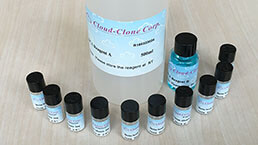
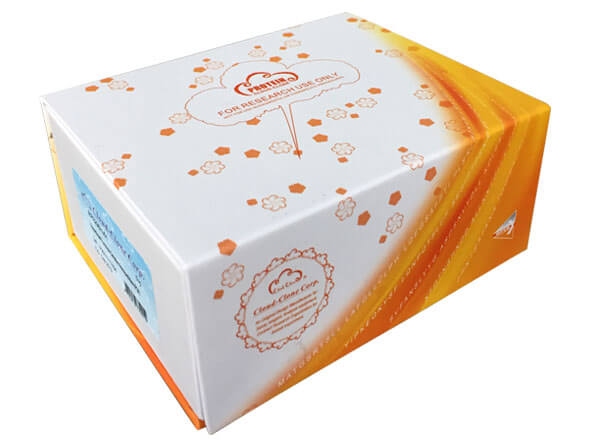 Packages (Simulation)
-
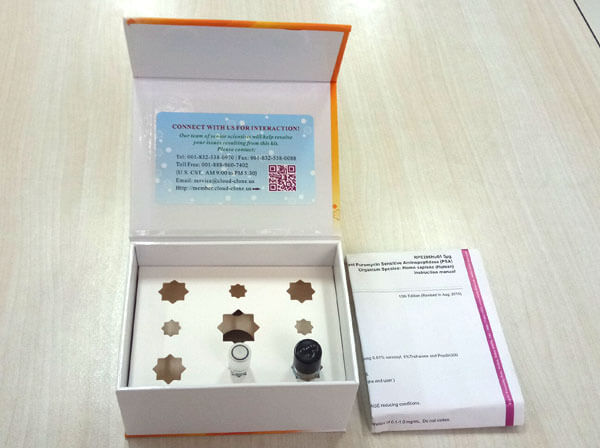 Packages (Simulation)
-
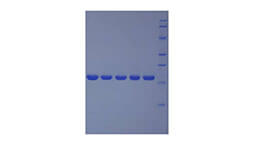
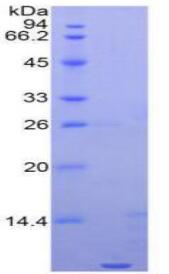 Figure. SDS-PAGE
-
 ISO9001: 2008, ISO13485: 2003 Registered
Activity test
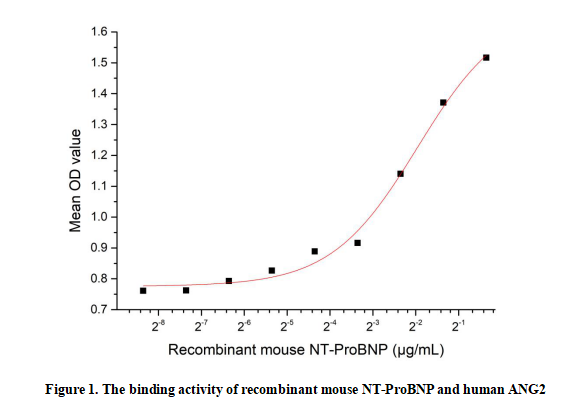
N-Terminal Pro Brain Natriuretic Peptide (NT-ProBNP) is a cleavage fragment of proBNP predominantly secreted by ventricular cardiomyocytes upon myocardial stretch, ischemia, or volume overload. Synthesized as a 108-amino acid precursor, proBNP splits into bioactive BNP and stable NT-ProBNP during myocardial secretion. Circulating NT-ProBNP clearance relies on renal filtration without receptor-mediated degradation, rendering it a superior cardiac biomarker with longer half-life and stable plasma concentration. It sensitively reflects ventricular wall stress, widely applied for diagnosing, stratifying risk and monitoring heart failure, myocardial infarction, and pulmonary hypertension. Elevated levels correlate strongly with cardiac dysfunction, adverse cardiovascular outcomes, and all-cause mortality, serving as a core clinical indicator for cardiac load assessment. NT-ProBNP interacts with ANGPT2 (ANG2) to jointly exacerbate myocardial microvascular injury and ventricular remodeling under cardiac stress.Briefly, ANG2 was diluted serially in PBS with 0.01% BSA (pH 7.4). Duplicate samples of 100 μL were then transferred to NT-ProBNP-coated microtiter wells and incubated for 1h at 37℃. Wells were washed with PBST and incubated for 1h with anti-ANG2 pAb, then aspirated and washed 3 times. After incubation with HRP labelled secondary antibody for 1h at 37℃, wells were aspirated and washed 5 times. With the addition of substrate solution, wells were incubated 15-25 minutes at 37℃. Finally, add 50 µL stop solution to the wells and read at 450/630nm immediately. Measured by its binding ability in a functional ELISA. When recombinant mouse NT-ProBNP is immobilized at 2 µg/mL(100 µL/well), the concentration of ANG2 that produces 50% optimal binding-response is found to be approximately 0.256 µg/mL.
Usage
Reconstitute in ddH2O to a concentration of 0.1-0.2 mg/mL. Do not vortex.
Storage
Avoid repeated freeze/thaw cycles. Store at 2-8°C for one month. Aliquot and store at -80°C for 12 months.
Stability
The thermal stability is described by the loss rate. The loss rate was determined by accelerated thermal degradation test, that is, incubate the protein at 37°C for 48h, and no obvious degradation and precipitation were observed. The loss rate is less than 5% within the expiration date under appropriate storage condition.
Increment services

Citations
- The role of serum n-terminal pro-brain natriuretic peptide in transient tachypnea of the newbornEuropeanreview: Source
- Vascular Adhesion Protein-1, a Novel Molecule, in Kidney and Heart Allograft RecipientsPubmed: 23769096
- Paradoxical low-flow, low-gradient aortic stenosis despite preserved left ventricular ejection fraction: new insights from weights of operatively excised aortic valvesPubmed: 24755006
- A Randomized Controlled Trial to Study the Effect of Yoga Therapy on Cardiac Function and N Terminal Pro BNP in Heart FailureNCBI: PMC3981569
- Diabetes enhances the intrahepatic vascular response to endothelin-1 in cirrhotic rats: association with the ETA receptor and pERK up-regulation.Pubmed:24636620
- Growth-differentiation factor 15 and osteoprotegerin in acute myocardial infarction complicated by cardiogenic shock: a biomarker substudy of the IABP-SHOCK II-trial.Pubmed:24903195
- Biomarkers and Echocardiographic Predictors of Myocardial Dysfunction in Patients with HypertensionPubMed: 25747153
- The Multi-Biomarker Approach for Heart Failure in Patients with HypertensionPubMed: 25984599
- Effect of Treatment on Body Fluid in Patients with Unilateral Aldosterone Producing Adenoma: Adrenalectomy versus SpironolactonePubMed: 26477337
- Diabetes enhances the intrahepatic vascular response to endothelin‐1 in cirrhotic rats: association with the ETA receptor and pERK up‐regulationPubMed: 24636620
- Qiliqiangxin improves cardiac function and attenuates cardiac remodeling in rats with experimental myocardial infarctionPubMed: 26261541
- NT-proBNP in Children With Left to Right Shunt and Dilated Cardiomyopathyserve:4485
- Human myoblast transplantation in mice infarcted heart alters the expression profile of cardiac genes associated with left ventricle remodelingPubmed:26457413
- Cardiovascular changes in patients with non-severe Plasmodium vivax malariaarticle:S2352-9067(16)30010-0
- Soluble Glycoprotein 130 and Heat Shock Protein 27 as Novel Candidate Biomarkers of Chronic Heart Failure with Preserved Ejection FractionPubmed:27067668
- Differences in biochemical and genetic biomarkers in patients with heart failure of various etiologies.pubmed:27448535
- Expression of pericardial fluid T-cells and related inflammatory cytokines in patients with chronic heart failure.pubmed:28565777
- Effect of Cardiac Resynchronization Therapy on Myocardial Fibrosis and Relevant Cytokines in a Canine Model With Experimental Heart Failure.pubmed:28127817
- Study of Vitamin D Status in Patients with Dilated Cardiomyopathy at a Teaching Hospital in North India.pubmed:28465969
- 5-methoxytryptophan is a potential marker for post-myocardial infarction heart failure - apreliminary approach to clinical utility.pubmed:27526355
- Beneficial Effects of Ozone Therapy on Oxidative Stress, Cardiac Functions and Clinical Findings in Patients with Heart Failure Reduced Ejection Fractionpubmed:28097518
- Serial heart rhythm complexity changes in patients with anterior wall ST segment elevation myocardial infarction.pubmed:28252107
- The predictive capabilities of a novel cardiovascular magnetic resonance derived marker of cardiopulmonary reserve on established prognostic surrogate markers in patients with pulmonary vascular disease: results of a longitudinal pilot studypubmed:28065166
- AVALIAÇÃO ELETROCARDIOGRÁFICA AMBULATORIAL DE CÃES COM EHRLIQUIOSE MONOCÍTICA CRÔNICAhandle:11449
- Cardiac biomarkers in dogs with visceral leishmaniasisS0301-732X2016000300004
- Evaluation of N-Terminal Pro Brain Natriuretic Peptide as a biomarker for clinical severity of heart failure in pediatric populationAttach432
- Cardioprotection against Heart Failure by Shenfu Injection via TGF-β/Smads Signaling Pathwaypubmed:28698735
- QSKL protects against myocardial apoptosis on heart failure via PI3K/Akt-p53 signaling pathway.pubmed:29209026
- Reversal effects of low-dose imatinib compared with sunitinib on monocrotaline-induced pulmonary and right ventricular remodeling in ratspubmed:29100963
- Qiliqiangxin Enhances Cardiac Glucose Metabolism and Improves Diastolic Function in Spontaneously Hypertensive Ratspubmed:28706558
- Prediction of electro-anatomical substrate using APPLE score and biomarkersPubmed:29893827
- Role of NT-proANP and NT-proBNP in patients with atrial fibrillation: Association with atrial fibrillation progression phenotypesPubmed:29604419
- MicroRNAs in Peripheral Mononuclear Cells as Potential Biomarkers in Hypertensive Patients With Heart Failure With Preserved Ejection FractionPubmed:29506053
- Differential microRNA expression profiles and bioinformatics analysis between young and aging spontaneously hypertensive ratsPubmed:29328372
- Regulation of circulating chromogranin B levels in heart failurePubmed:29098879
- Effect of 6-min Walk Test on pro-BNP Levels in Patients with Pulmonary Arterial HypertensionPubmed:29564533
- Dynamic monitoring the level of NT-proBNP in assessing the value of cardiac function and prognosis in patients with systemic infectionijcem0072283.pdf
- Signature-oriented investigation of the efficacy of multicomponent drugs against heart failurePubmed: 30230922
- Qiliqiangxin ameliorates cardiac dysfunction in heart failure rats post myocardial infarction via activation of HIF/VEGF pathway
- Decreasing cardiac iron overload with Amlodipine and Spirulina in children with β-thalassemiaDoi: 10.1016/j.phoj.2018.10.001
- Acute Responses of Novel Cardiac Biomarkers to a 24-h Ultra-MarathonPubmed: 30625976
- Relationship between Natriuretic Peptide Levels with Heart and Kidney Parameters in Rats with Chronic Renal Failure.
- Biological markers for the effects of yoga as a complementary and alternative medicinePubmed: 30735481
- Trimetazidine Attenuates Exhaustive Exercise-Induced Myocardial Injury in Rats via Regulation of the Nrf2/NF-κB Signaling PathwayPubmed: 30890937
- Potential Effects of CXCL9 and CCL20 on Cardiac Fibrosis in Patients with Myocardial Infarction and Isoproterenol-Treated RatsPubmed: 31083544
- Evaluation of heart rate variability and behavior of electrocardiographic parameters in dogs affected by chronic Monocytic EhrlichiosisPubmed: 31125348
- Cardio-protective effect of the secretome of Sca-1+ and Sca-1-cells in heart failure–not equal, but equally important? Paracrine cell effects on heart failure
- The potential role of inflammation in cryptogenic stroke
- Arterial Stiffness and Indices of Left Ventricular Diastolic Dysfunction in Patients with Embolic Stroke of Undetermined EtiologyPubmed: 31612072
- Hormonal Response to Incremental and Continuous Exercise in Cyclists with Left Ventricle HypertrophyPubmed: 32148580
- Preclinical development of a miR-132 inhibitor for heart failure treatmentPubmed: 32005803
- Evaluating the Relationship of GDF-15 with Clinical Characteristics, Cardinal Features, and Survival in Multiple MyelomaPubmed: 33144847
- CDR132L improves systolic and diastolic function in a large animal model of chronic heart failurePubmed: 33089304
- Omega-3 polyunsaturated fatty acids alleviate hydrogen sulfide-induced blood-testis barrier disruption in the testes of adult micePubmed: 33068716
- Apela improves cardiac and renal function in mice with acute myocardial infarctionPubmed: 32686917
- Left Ventricular Diastolic Dysfunction as Predictor of Unfavorable Prognosis After ESUS33727824
- κ Opioid Receptor Agonist Inhibits Myocardial Injury in Heart Failure Rats through Activating Nrf2/HO-1 Pathway and Regulating Ca2+-SERCA2a34373768
- Hemodynamic Responses in Lower Limb Lymphedema Patients Undergoing Physical Therapy34356497
- Risk Stratification of Pulmonary Thromboembolism using Brain Natriuretic Peptide and Troponin I; a Brief ReportPubmed:35072097
- Interplay between mineral bone disorder and cardiac damage in acute kidney injury: from Ca2+ mishandling and preventive role of Klotho in mice to its potential …Pubmed:35077866
- The Key Role of Hepcidin-25 in Anemia in Multiple Myeloma Patients with Renal ImpairmentPubmed:35334593
- Prothymosin α Gene Transfer Modulates Myocardial Remodeling after Ischemia-Reperfusion InjuryPubmed:35273440