


Active Vascular Endothelial Growth Factor 121 (VEGF121) 

- UOM
- FOB US$ 288.00 US$ 720.00 US$ 1,440.00 US$ 4,320.00 US$ 10,800.00
- Quantity
Overview
Properties
- Product No.APB851Hu01
- Organism SpeciesHomo sapiens (Human) Same name, Different species.
- ApplicationsCell culture; Activity Assays.
Research use only - DownloadInstruction Manual
- CategoryCytokineSignal transductionTumor immunityInfection immunity
- Buffer Formulation20mM Tris, 150mM NaCl, pH8.0, containing 1mM EDTA, 1mM DTT, 0.01% SKL, 5% Trehalose and Proclin300.
- Traits Freeze-dried powder, Purity > 95%
- Isoelectric Point6.3
Sign into your account
Share a new citation as an author
Upload your experimental result
Review

Contact us
Please fill in the blank.
-
 Packages (Simulation)
-
 Packages (Simulation)
-
 Gene sequencing
-
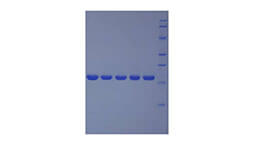
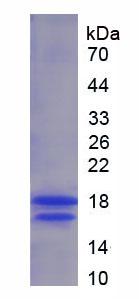 Figure. SDS-PAGE
-
 WB Image
-
 ISO9001: 2008, ISO13485: 2003 Registered
Activity test

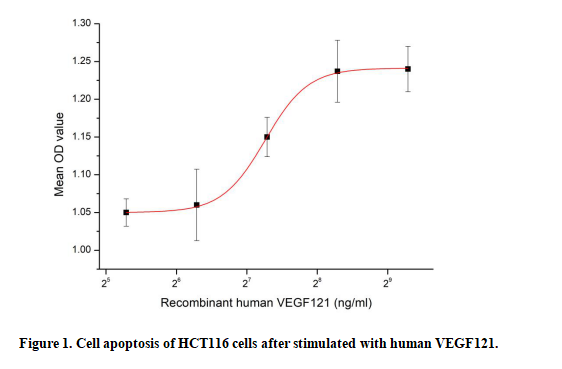
Vascular Endothelial Growth Factor 121 (VEGF121), a secreted glycoprotein member of the VEGF family and a VEGFA splice variant, lacks heparin-binding domains for free extracellular solubility. It binds VEGFR121 on vascular endothelial cells to exert robust pro-angiogenic effects, promoting endothelial cell proliferation, migration and tube formation to drive vasculogenesis and angiogenesis. Distinct from anti-proliferative/pro-apoptotic proteins, it inhibits endothelial cell apoptosis via survival signaling, sustaining vascular integrity and mediating tissue vascularization in development, wound repair and pathological angiogenesis.To test the effect of VEGF121 on cell apoptosis, HCT116 cells were seeded into triplicate wells of 96-well plates at a density of 5,000 cells/well and allowed to attach, replaced with serum-free overnight, then the medium was replaced with 5% serum standard DMEM prior to the addition of various concentrations of recombinant human VEGF121. After incubated for 48h, cells were observed by inverted microscope and cell proliferation was measured by Cell Counting Kit-8 (CCK-8). Briefly, 10 µl of CCK-8 solution was added to each well of the plate, then the absorbance at 450 nm was measured using a microplate reader after incubating the plate for 1-4 hours at 37 ℃. Cell viability was assessed by CCK-8(Cell Counting Kit-8 ) assay after incubation with recombinant VEGF121 for 48h. The result was shown in Figure 1. It was obvious that VEGF121 significantly decreased cell viability of HCT116 cells. The ED50 of recombinant human VEGF121 is 153 ng/mL.
Usage
Reconstitute in 20mM Tris, 150mM NaCl (pH8.0) to a concentration of 0.1-1.0 mg/mL. Do not vortex.
Storage
Avoid repeated freeze/thaw cycles. Store at 2-8°C for one month. Aliquot and store at -80°C for 12 months.
Stability
The thermal stability is described by the loss rate. The loss rate was determined by accelerated thermal degradation test, that is, incubate the protein at 37°C for 48h, and no obvious degradation and precipitation were observed. The loss rate is less than 5% within the expiration date under appropriate storage condition.
Increment services

Citations
- Elevated PLGF contributes to small-cell lung cancer brain metastasisPubMed: 22797069
- VEGF-121 plasma level as biomarker for response to anti-angiogenetic therapy in recurrent glioblastomaPubmed:29747600
- A pediatric case of anaplastic astrocytoma with a gliomatosis cerebri; the growth pattern and changes in serum VEGF-121 levels after bevacizumab treatmentPubmed: 33222957
- Associations between VEGF isoforms and impending retinopathy of prematurityPubmed: 32737903
- Activin A triggers angiogenesis via regulation of VEGFA and its overexpression is associated with poor prognosis of oral squamous cell carcinomaPubmed: 32377747