


Cloud-Clone Products Support Ang II-mediated Coagulation Dysfunction Study Published in Nature Communications
On September 14, 2026, a research team from the School of Basic Medicine, Qingdao University published a research paper titled Angiotensin II exacerbates intracerebral hemorrhage in mice via heparin-like antithrombin activation and coagulation dysfunction in Nature Communications. The study confirms that angiotensin II allosterically activates antithrombin through a heparin-like effect, triggering coagulation dysfunction and thereby aggravating intracerebral hemorrhage. It uncovers a novel molecular mechanism underlying the paradoxical tendency of hypertension to simultaneously promote thrombosis and hemorrhage. Furthermore, this effect is independent of the classical Ang II receptor pathway, offering new insights and potential therapeutic targets for the prevention and treatment of hypertension-associated intracerebral hemorrhage.
This study reveals a novel Ang II‑receptor‑independent anticoagulant function of angiotensin II (Ang II), which explains the molecular mechanism underlying the paradoxical prothrombotic and hemorrhagic predispositions in hypertension. Ang II allosterically modulates the 386‑397 loop of antithrombin (AT), exerting a heparin‑like effect to accelerate the antithrombin‑thrombin interaction and thereby inhibit coagulation. Animal experiments show that a single administration of Ang II suppresses coagulation, alleviates thrombosis, yet aggravates intracerebral hemorrhage; by contrast, anti‑Ang II monoclonal antibody produces the opposite effects. This effect is not affected by Ang II receptor blockade or knockout. In the 2K1C hypertensive mouse model of intracerebral hemorrhage, anti‑Ang II monoclonal antibody improves coagulation function and attenuates intracerebral‑hemorrhage‑induced injury. This study distinguishes the acute versus chronic effects of Ang II: acute exposure induces anticoagulation and promotes hemorrhage, whereas chronic sustained stimulation exerts pro‑thrombotic effects. These findings suggest that targeting the Ang II‑antithrombin interaction may represent a novel therapeutic strategy for intracerebral hemorrhage.
This study utilized four Cloud-Clone products (FPA ELISA Kit, TAT ELISA Kit, AngII ELISA Kit and AngII monoclonal antibody). Critical assays including ELISA and Co-IP strongly supported the identification and validation of Ang II’s novel heparin-like anticoagulant mechanism.
Products No.: CEB237Hu, SEA831Hu
Products Name: ELISA Kit for Fibrinopeptide A (FPA), ELISA Kit for Thrombin/Antithrombin Complex (TAT)
Sample: Supernatant of in vitro recombinant protein incubation system
Application: ELISA
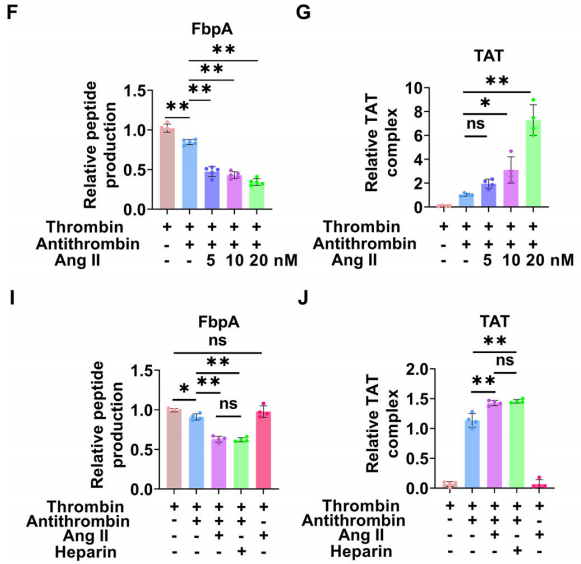
Fig. 1 | Angiotensin II prolongs clotting time and potentiates antithrombin.
F Ang II reduced FbpA release from thrombin-antithrombin-treated fibrinogen in Enzyme-Linked Immunosorbent Assay (ELISA) assays. Data represent mean ± SD of 4 independent experiments. One-way ANOVA with Dunnett’s post hoc test. p < 0.0001 for all comparisons versus Thrombin + Antithrombin. G Ang II increased thrombinantithrombin complex (TAT) formation in ELISA quantification. Data represent. I Ang II (5 nM) exhibited an effect equal to heparin in suppressing antithrombin-mediated thrombin inhibition, as demonstrated by FbpA ELISA analysis. Data represent mean ± SD of 4 independent experiments. One-way ANOVA with Dunnett’s post hoc test. p = 0.0453 (Thrombin vs Thrombin + Antithrombin), p = 0.9413 (Thrombin vs Thrombin + Ang II, ns), p < 0.0001 (Thrombin + Antithrombin vs Thrombin + Antithrombin + Ang II), p < 0.0001 (Thrombin + Antithrombin vs Thrombin +Antithrombin + Heparin), p = 0.9672 (Thrombin + Antithrombin + Ang II vs Thrombin + Antithrombin + Heparin, ns). J Ang II (5 nM) promoted TAT complex formation with comparable potency to heparin in ELISA quantification. Data represent mean ± SD of 4 independent experiments. One-way ANOVA with Dunnett’s post hoc test. p = 0.0003 (Thrombin + Antithrombin vs Thrombin + Antithrombin + Ang II), p = 0.0001 (Thrombin + Antithrombin vs Thrombin + Antithrombin + Heparin), p = 0.6551 (Thrombin + Antithrombin + Ang II vs Thrombin + Antithrombin + Heparin, ns). mean ± SD of 4 independent experiments. One-way ANOVA with Dunnett’s post hoc test versus Thrombin + Antithrombin group. p = 0.3432 (Thrombin + Antithrombin + Ang II 5 nM, ns), p = 0.0143 (Thrombin + Antithrombin + Ang II 10 nM), p < 0.0001 (Thrombin + Antithrombin + Ang II 20 nM).
Products No.: MAA005Mi21
Products Name: Monoclonal Antibody to Angiotensin II (AngII)
Sample: Human plasma; 293F cell lysate
Application: Co-IP
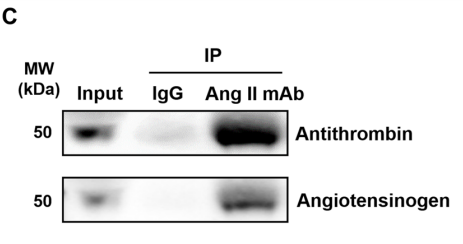
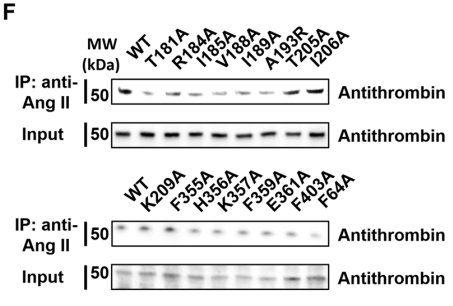
Fig. 2 | Direct interactions between Ang II and antithrombin.
C Angiotensinogen and antithrombin form endogenous complexes in normal plasma, as demonstrated by co-immunoprecipitation.Representative images from three independent experiments with similar resultswere shown.
F Co-immunoprecipitation assays showed that mutations of interacting amino acids disrupted Ang II-antithrombin binding. WT: wild-type.
Products No.: CEA005Hu
Products Name: ELISA Kit for Angiotensin II (AngII)
Sample: Mouse plasma
Application: ELISA
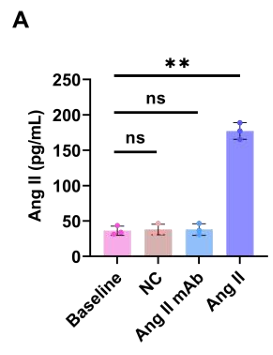
Figure S6. A single injection of Ang II upregulates plasma Ang II levels but does not alter leukocyte counts, TNF-α and IL-6 expression, platelet counts and plasma fibrinogen levels.
(A) Plasma Ang II levels were quantified using a validated ELISA assay 8 minutes after each in vivo challenge (Data represent mean ± SD (n=3), ns: no significance by one-way ANOVA with Dunnett’s post hoc test).