


Anti-Galactosidase Beta (GLb) Polyclonal Antibody 

GL-B; b-GAL; bGAL; ELNR1; EBP; GLB1; Lactase; Elastin Receptor 1,67kDa; Elastin Receptor 1(67kD); Acid Beta-Galactosidase
- UOM
- FOB US$ 132.00 US$ 220.00 US$ 352.00 US$ 440.00 US$ 770.00
- Quantity
Overview
Properties
- Product No.FAA196Ca01
- Organism SpeciesCanis familiaris; Canine (Dog) Same name, Different species.
- ApplicationsFCM
Research use only - Downloadn/a
- CategoryEnzyme & KinaseMetabolic pathway
- Ig Type IgG, Potency n/a
- PurificationAntigen-specific affinity chromatography followed by Protein A affinity chromatography
- LabelNone
- Excitation Laser
- Vol. per test
- Buffer Formulation0.01M PBS, pH7.4, containing 0.05% Proclin-300, 50% glycerol.
- TraitsLiquid
Share your citation
Upload your experimental result
Review
Leave a message
Loading...
Sign into your account
Share a new citation as an author
Upload your experimental result
Review
Please attach serial No. on instruction manual

Contact us
Please fill in the blank.
Name*
Organization
Address
E-mail address*
Telephone
Inquiry*
Verification code*

-
 Packages (Simulation)
-
 Packages (Simulation)
-
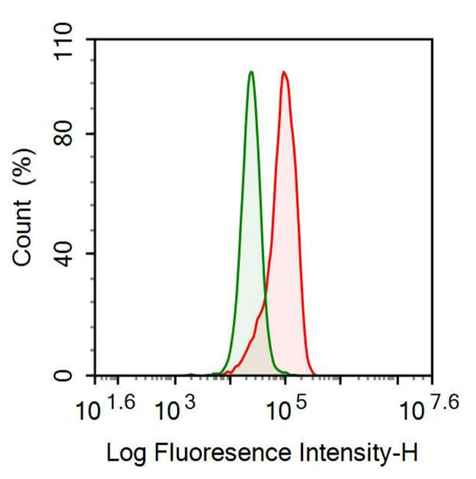 Human A549 cell line was fixed with 2% paraformaldehyde (10 min) , permeabilised with 0.1% BSA-Triton X-100,then stained with 20µg/ml rabbit Anti-canine GLb Polyclonal Antibody (Catalog FAA196Ca01, red histogram) or Isotype control antibody (Catalog IS067-Rb01, green histogram), followed by 1µg/ml FITC-conjugated Anti-rabbit IgG Secondary Antibody (Catalog SAA544Rb18).
-
 ISO9001: 2008, ISO13485: 2003 Registered
Usage
Flow cytometry: 20µg/ml;
Optimal working dilutions must be determined by end user.
Storage
Store at 4°C for frequent use. Stored at -20°C in a manual defrost freezer for one year without detectable loss of activity. Avoid repeated freeze-thaw cycles.
Giveaways
Increment services
-
 Protein A/G Purification Column
-
 Positive Control for Antibody
-
 Tissue/Sections Customized Service
-
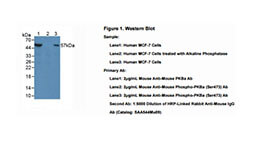 Phosphorylated Antibody Customized Service
-
 Flow Cytometry (FCM) Experiment Service
-
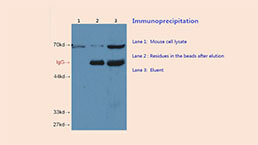 Immunoprecipitation (IP) Experiment Service
-
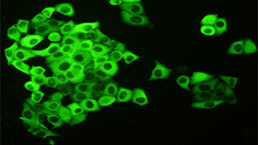 Immunofluorescence (IF) Experiment Service
-
 Buffer
-
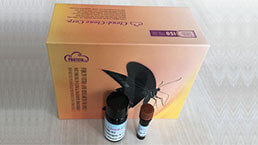 DAB Chromogen Kit
-
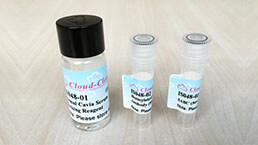 SABC Kit
-
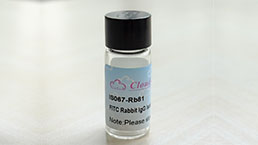 Isotype Control
-
 Real Time PCR Experimental Service
Citations
- Human epidermis reconstructed from UV-B irradiated keratinocytes mimics epidermal ageingFUDISS_derivate_000000020558
- Increased permeability of reconstructed human epidermis from UVB-irradiated keratinocytes.pubmed:28034807
- Periodontal ligament cells in adolescents and adults: Genetic level responses to orthodontic forcesPubmed: 33082075
- Morphological alterations, activity, mRNA fold changes, and aging changes before and after orthodontic force application in young and adult human-derived ¡34041525